

Property management company operations are defined as the professional oversight of all daily and strategic functions required to maintain real estate assets, serve tenants, and protect owner investment. These operations span property upkeep, tenant management, financial oversight, and resident services across residential, commercial, and industrial portfolios. Companies like those using AppFolio, Buildium, or Yardi manage these functions through structured workflows, legal agreements, and trained staff. Understanding what property management company operations actually involve helps property owners, investors, and operators make smarter decisions about how their assets are managed.
What are the core functions of property management companies?
Daily tasks for residential property management include tenant screening, maintenance coordination, rent collection, lease enforcement, vendor supervision, compliance with landlord-tenant laws, and property inspections. These are not isolated duties. They form an interconnected system where a delay in one area, say, a slow maintenance response, creates problems in another, such as tenant dissatisfaction or lease non-renewal.
Property management functions generally fall into four categories:
- Leasing and tenant management: Marketing vacancies, screening applicants, executing leases, handling renewals, and managing move-in and move-out processes.
- Maintenance coordination: Receiving and triaging repair requests, dispatching vendors, tracking completion, and scheduling preventive inspections.
- Financial management: Collecting rent and security deposits, processing owner disbursements, managing operating budgets, and producing financial reports.
- Compliance and legal oversight: Adhering to local landlord-tenant laws, maintaining required licenses, and managing eviction procedures when necessary.
Resident management is not a separate customer service function. It drives leasing success and asset performance directly, which means tenant communication is an operational priority, not an afterthought.
Property managers also act as stewards of physical assets. Their job is to preserve property value and generate income through consistent oversight. A property that receives timely repairs and regular inspections holds its value better and commands stronger rents over time.
Pro Tip: Use AppFolio, Buildium, or Yardi to centralize work orders, lease tracking, and financial reporting in one platform. Disconnected spreadsheets are the fastest path to operational errors.
How do workflows and checklists improve property management processes?
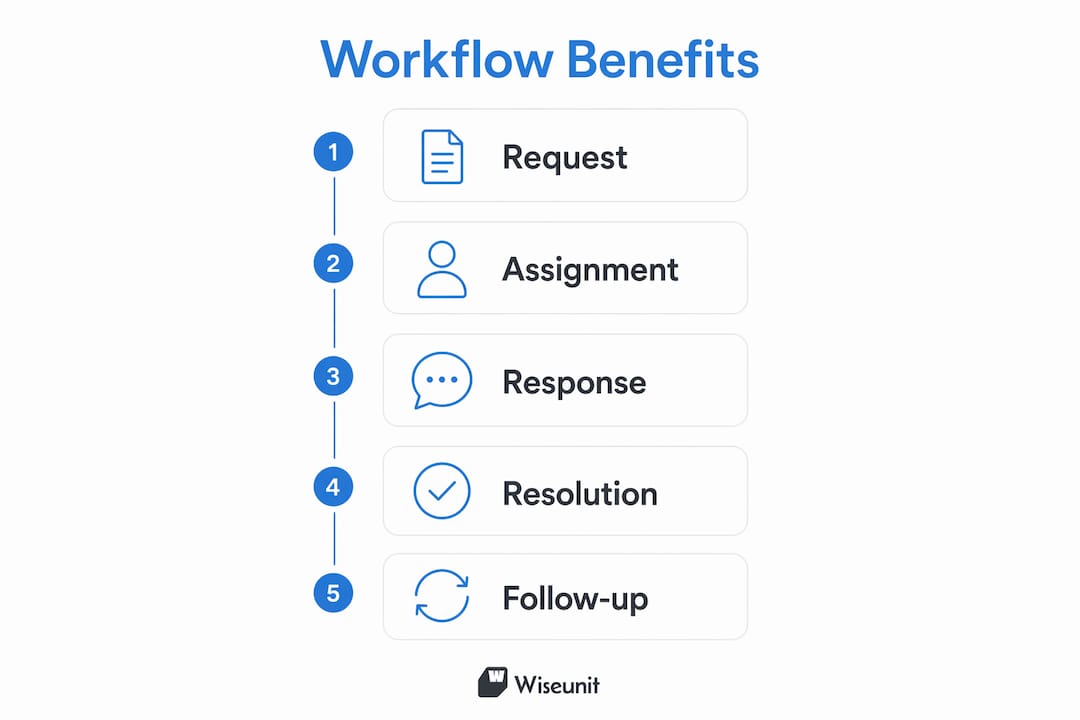
Documented workflows are the backbone of scalable property management. Standard operating procedures improve scalability and tenant satisfaction by preventing reactive chaos, where managers spend their days firefighting instead of executing planned tasks.
A practical operational cadence looks like this:
- Daily: Triage all incoming maintenance requests by urgency tier. Respond to general tenant inquiries within 24 hours. Confirm vendor scheduling for open work orders.
- Weekly: Review rent collection status and follow up on late payments. Conduct a walkthrough of any vacant units. Check in with vendors on outstanding repairs.
- Monthly: Complete scheduled property inspections. Reconcile operating expenses. Review lease expiration dates and initiate renewal conversations.
- Quarterly: Audit vendor performance and contract terms. Review compliance documentation. Assess preventive maintenance schedules.
The difference between a well-run and poorly run property management company often comes down to response time standards by intake channel and urgency tier. Top operators set a 24-hour target for general inquiries and a 4-hour target for urgent maintenance. This prevents backlog from accumulating and reduces the risk of a minor issue escalating into an expensive emergency repair.
Workflow clarity and ownership are the critical differentiators for operational success, not simply adding more staff or software. A team with clear ownership of each task type will consistently outperform a larger team operating without defined processes.
| Workflow area | Without standardization | With standardization |
|---|---|---|
| Maintenance requests | Ad hoc, delayed responses | Triaged by urgency, tracked to completion |
| Tenant communications | Inconsistent, reactive | Scheduled, documented, time-bound |
| Financial reporting | Manual, error-prone | Automated, reconciled monthly |
| Compliance tracking | Missed deadlines | Calendar-driven, auditable |
Pro Tip: Build your maintenance workflow processes before selecting software. Technology reinforces good processes. It cannot replace missing ones.
What legal frameworks govern property management operations?
Property management agreements define the legal and operational boundaries within which a manager acts. These contracts specify the scope of manager authority, spending limits between $300 and $1,500 per repair, and the division of responsibilities between owner and manager. Without a well-drafted agreement, both parties face exposure to disputes, unauthorized expenditures, and liability gaps.
Key provisions in a standard property management agreement include:
| Agreement provision | Operational impact |
|---|---|
| Spending authority threshold | Defines when manager can approve repairs without owner consent |
| Escalation procedures | Specifies how and when owner must be notified for larger decisions |
| Duration and termination | Sets contract length and exit conditions for both parties |
| Licensing requirements | Confirms manager holds state-required real estate or property management license |
| Owner-retained responsibilities | Clarifies what decisions remain with the property owner |
Operational authority boundaries prevent two common failure modes: stalled repairs because a manager waits for owner approval on a $400 plumbing fix, and unauthorized work where a manager commits the owner to a $10,000 project without notification. Both outcomes damage the owner-manager relationship and tenant experience.
State licensing requirements add another layer. Most U.S. states require property managers to hold an active real estate broker or property management license. Managers operating without proper licensure expose their clients to legal liability and void the protections a formal agreement provides. For a detailed look at how these obligations connect to day-to-day operations, the compliance requirements for property managers are worth reviewing in full.
Property managers typically operate under a general agency relationship with the property owner, meaning they have broad authority to act on the owner's behalf within the agreement's defined limits. Some agreements use a limited agency structure, which restricts the manager to specific pre-approved actions only.
How do operations differ between residential and commercial properties?
Residential and commercial property management differ in lease terms, financial management, compliance complexity, and operational tasks. Treating them as interchangeable is a common mistake that leads to operational gaps.
| Operational area | Residential | Commercial |
|---|---|---|
| Lease terms | 12-month standard, frequent renewals | 3 to 10-year terms, complex negotiations |
| Maintenance requests | High volume, routine repairs | Lower volume, higher cost per incident |
| Financial management | Gross rent collection, simple reconciliation | CAM charges, expense reconciliation, NNN structures |
| Tenant improvements | Rare, cosmetic only | Common, often manager-coordinated |
| Compliance focus | Habitability laws, fair housing | Zoning, ADA, commercial building codes |
Residential property management centers on tenant screening, lease renewals, and maintenance at scale. A company managing 500 single-family rentals or a multifamily portfolio will process hundreds of maintenance requests per month, making intake triage and vendor coordination the most operationally demanding functions.
Commercial management introduces common area maintenance reconciliations, where tenants pay a proportional share of building operating expenses. This requires detailed expense tracking and annual reconciliation reports. Tenant improvement oversight, where the manager coordinates build-outs or renovations for incoming commercial tenants, adds project management responsibilities that residential operators rarely encounter.
Staffing models reflect these differences. Residential-focused companies often hire dedicated maintenance coordinators to handle request volume. Commercial operators tend to invest more in lease administration and financial analysts to manage the complexity of multi-tenant expense structures.
What are best practices for optimizing property management operations?
Best practices in property management operations center on standardization, clear authority, and technology that executes rather than just tracks. The following practices separate high-performing operators from those constantly reacting to problems.
- Document every workflow. Write down the exact steps for handling a maintenance request, processing a lease renewal, and responding to a tenant complaint. Undocumented processes live in people's heads and disappear when staff turns over.
- Set response time targets. Commit to 24 hours for general inquiries and 4 hours for urgent maintenance. Post these standards internally and hold the team accountable to them.
- Define spending authority clearly. Every manager should know exactly what they can approve without owner sign-off. Ambiguity here causes delays and disputes.
- Automate routine coordination. Tools that automate maintenance with AppFolio, Buildium, and Yardi reduce manual follow-up and keep all parties informed without adding headcount.
- Review processes quarterly. Workflows that worked for 100 units often break at 300. Schedule regular process audits before problems surface.
Pro Tip: Track your average time-to-resolution for maintenance requests by category. If HVAC repairs consistently take longer than plumbing, that signals a vendor gap, not a workflow gap. Knowing the difference saves time and money.
Key takeaways
Effective property management company operations require documented workflows, clear legal authority, and technology that executes tasks rather than simply tracking them.
| Point | Details |
|---|---|
| Core functions are interconnected | Leasing, maintenance, finance, and compliance failures in one area cascade into others. |
| Workflows prevent reactive chaos | Daily, weekly, and monthly checklists keep teams proactive and tenants satisfied. |
| Agreements define operational limits | Spending thresholds and escalation rules protect both owners and managers from disputes. |
| Residential and commercial differ significantly | CAM reconciliations, lease complexity, and staffing models vary by property type. |
| Technology should execute, not just track | Automation tools reduce manual work and maintain response time standards at scale. |
Why workflow discipline matters more than software selection
After working closely with property management teams across the US and Canada, the pattern I see most often is this: companies invest in AppFolio or Buildium, expect the software to fix their operations, and then wonder why things are still chaotic six months later. The software is not the problem. The missing piece is almost always workflow discipline.
A team that has documented exactly who handles a maintenance request at each step, what the response time target is, and when to escalate will outperform a team with better software but no defined process. I have seen property management team efficiency collapse not because of bad tools, but because ownership of tasks was unclear. Two people thought the other was following up with the vendor. Neither did. The tenant waited two weeks for a repair that should have taken three days.
The other thing I would push back on is the idea that owner involvement always improves outcomes. Owners who require approval on every repair under $1,000 create bottlenecks that frustrate tenants and burn out managers. The best agreements I have seen give managers real spending authority within defined limits and reserve owner decisions for genuinely significant expenditures. That balance is what allows a property management company to actually operate, rather than just coordinate approvals.
Response time is where tenant retention is won or lost. A tenant who waits five days for a response to a non-urgent repair request will not renew. A tenant who gets a same-day acknowledgment and a scheduled repair date almost always will. That is not a technology problem. It is a process and culture problem that technology can support once the foundation is in place.
— Laur
See how Wiseunit handles maintenance operations end to end
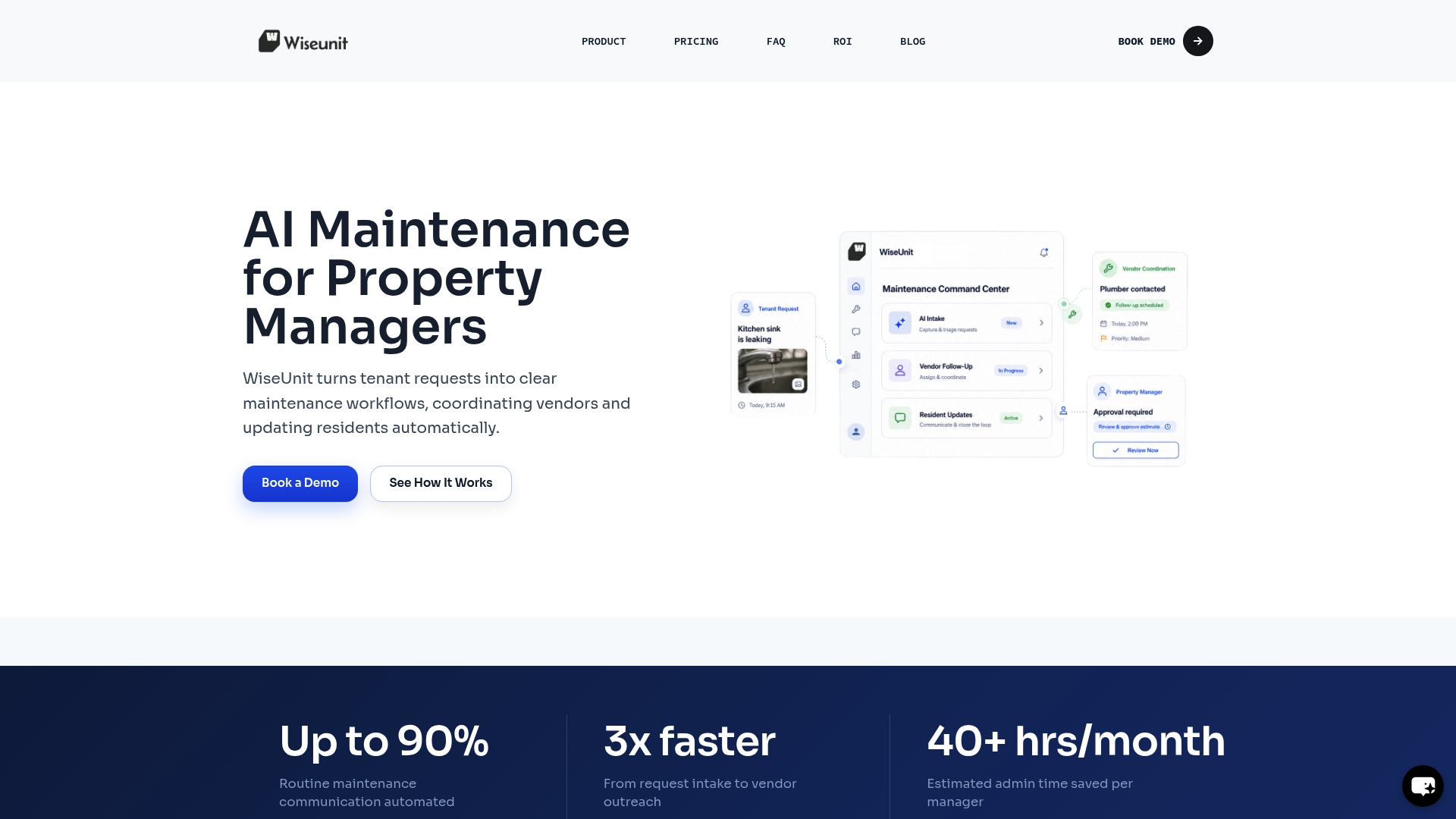
Wiseunit is built specifically for property management companies that deal with high volumes of maintenance requests and need more than a ticket tracker. The platform acts as a maintenance execution layer, handling tenant intake via calls, SMS, or online forms, triaging requests by urgency, coordinating vendors, scheduling repairs, and syncing status updates directly into AppFolio, Buildium, or Yardi. Property managers get fewer interruptions, faster resolution times, and a complete audit trail without adding maintenance coordinators. If you want to see what the operational impact looks like for your portfolio, use the Wiseunit ROI calculator to run the numbers. Or explore the full AI maintenance coordination platform to see how it fits your current workflow.
FAQ
What is property management company operations?
Property management company operations are the structured set of functions a management company performs to oversee real estate assets, including tenant management, maintenance coordination, rent collection, and legal compliance. These operations apply to residential, commercial, and industrial properties.
What do property management companies do on a daily basis?
Daily property management operational tasks include triaging maintenance requests, following up on rent collection, responding to tenant inquiries, coordinating vendors, and updating records in platforms like AppFolio or Buildium.
How does a property management agreement affect operations?
A property management agreement sets spending authority limits, typically between $300 and $1,500 per repair, defines escalation procedures, and specifies which decisions require owner approval. These terms directly shape how efficiently a manager can respond to day-to-day issues.
How do residential and commercial property management operations differ?
Residential operations focus on high-volume leasing, tenant retention, and routine maintenance. Commercial operations add CAM reconciliations, tenant improvement coordination, and more complex lease structures that require dedicated financial management.
What technology do property management companies use?
Property management companies commonly use platforms like AppFolio, Buildium, and Yardi to manage leases, work orders, and financial reporting. AI tools like Wiseunit extend these platforms by executing maintenance workflows automatically rather than just logging requests.