
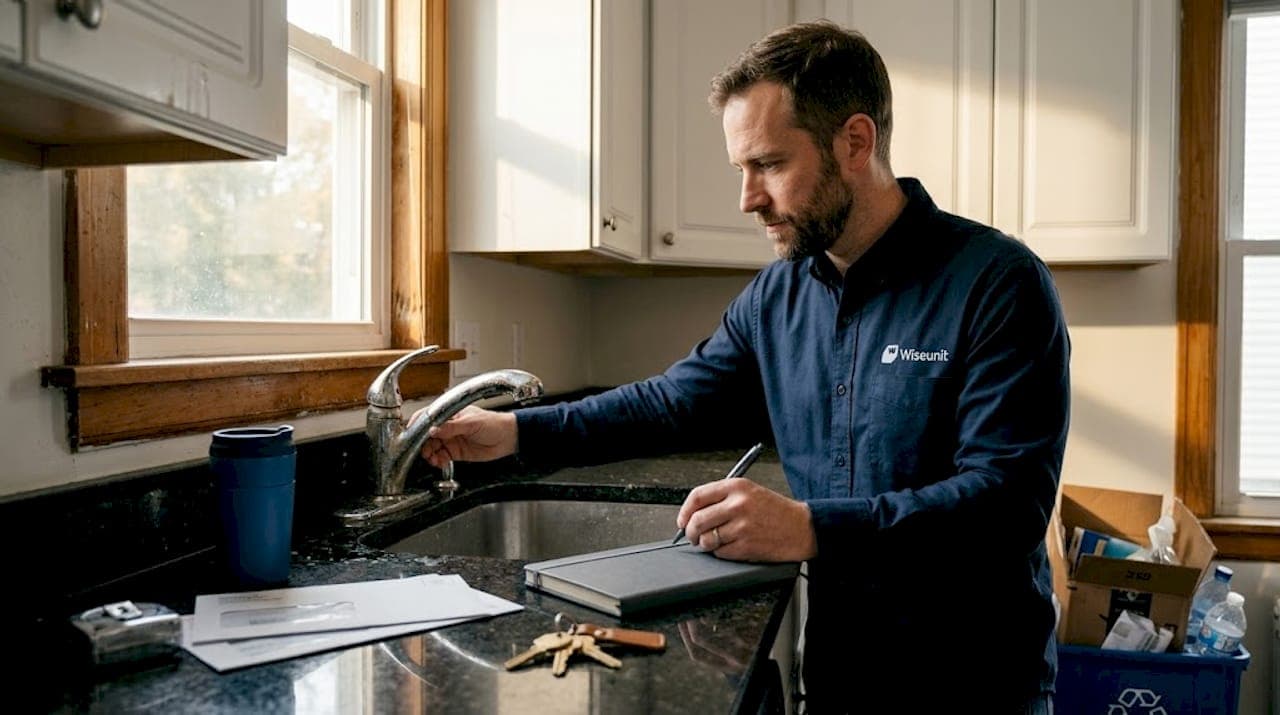
Managing your own property maintenance is a choice that surprises many people from outside the industry. The conventional wisdom says hire a property manager, hand off the headaches, and collect rent. But a significant number of landlords push back on that logic every day. Understanding why landlords handle their own maintenance reveals a practical calculation rooted in cost control, legal accountability, and the desire to know exactly what is happening inside their properties. This guide breaks down the real motivations, the legal stakes, the operational pitfalls, and the systems that make self-managed maintenance actually work.
Table of Contents
- Key takeaways
- Why landlords handle their own maintenance
- Legal responsibilities you cannot ignore
- Operational challenges and how to fix them
- When DIY maintenance stops working
- My take on why systems matter more than effort
- How Wiseunit helps landlords manage maintenance without the chaos
- FAQ
Key takeaways
| Point | Details |
|---|---|
| Cost savings drive self-management | Avoiding management fees of 8-12% of monthly rent is the primary financial motivation for landlords. |
| Legal exposure is real and immediate | Failing to document and respond to repair requests can give tenants legal grounds to act and seek reimbursement. |
| Informal systems cause most failures | Missed maintenance requests typically stem from fragmented tracking, not lack of effort or care. |
| Communication beats speed | Tenants prioritize consistent status updates over fast repairs when evaluating landlord responsiveness. |
| Technology makes DIY sustainable | Centralized intake and automated coordination tools let landlords scale without burning out or hiring more staff. |
Why landlords handle their own maintenance
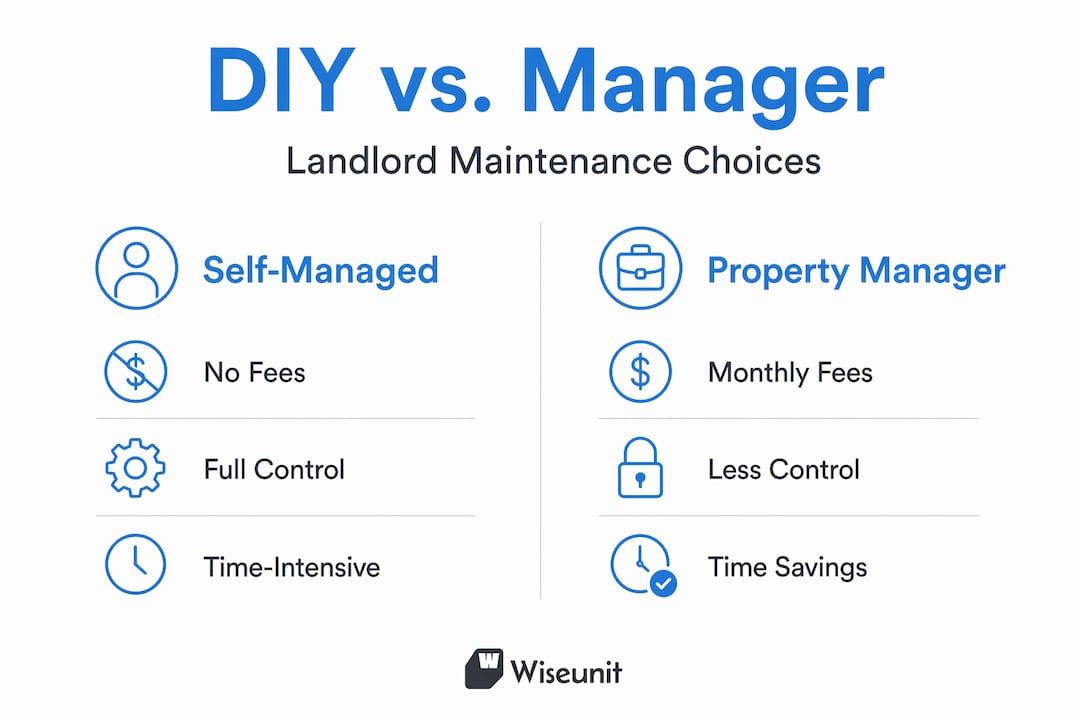
The decision to self-manage maintenance is rarely impulsive. Most landlords who go this route have done the math, and the math often makes sense. Management fees range from 8-12% of monthly rent, and that is before leasing fees, coordination markups, and vendor premiums get added in. On a property renting for $2,000 per month, that is $160 to $240 every single month, or nearly $3,000 per year, going to a third party before you account for anything else.
For landlords with one to five units, that math hits differently. The fee structure that makes sense for a 50-unit portfolio can feel disproportionate when you are managing a duplex or a small collection of single-family rentals. Self-management lets landlords keep that margin and redirect it toward repairs, reserves, or simply profit.
Beyond the money, control is a major factor. When you manage your own maintenance, you decide which vendors get called, how quickly a repair gets scheduled, and what quality standard gets applied. That level of oversight matters to landlords who have had bad experiences with property managers who used overpriced contractors or let minor issues sit until they became expensive ones.
The real cost comparison
Here is a straightforward framework for evaluating whether self-management makes financial sense for your portfolio:
| Cost factor | DIY landlord | Property manager |
|---|---|---|
| Monthly management fee | $0 | $160-$240 per unit |
| Vendor markup on repairs | Minimal (your own network) | Often 10-20% added |
| Leasing fee per new tenant | $0 or low | 50-100% of one month's rent |
| Time investment per unit | 2-5 hours/month | Near zero |
| Risk of missed requests | Higher without systems | Lower with good management |
The time column is where landlords often underestimate the real cost. DIY landlording often costs more in time, vacancy, and preventable repairs than the saved management fees suggest on paper. That does not mean self-management is the wrong choice. It means you need to account for your time honestly and build systems that reduce it.
Pro Tip: Before committing to self-management, track how many hours per month you actually spend on maintenance coordination for three months. Multiply that by a realistic hourly rate for your time. Then compare that number to what a property manager would charge. The result often surprises landlords.
Legal responsibilities you cannot ignore
Maintenance responsibilities for landlords go well beyond fixing things when they break. There is a legal framework around how quickly you respond, how you document your actions, and what happens when you do not meet those obligations. Ignoring this framework does not just create tenant friction. It creates legal exposure.
The most immediate risk is the repair-and-deduct scenario. If landlords fail to promptly address repairs after receiving written notice, tenants in many states can legally hire someone to fix the problem and deduct the cost from rent. That is not a hypothetical. It happens regularly, and it almost always costs the landlord more than the original repair would have.
Documentation is your primary defense against these situations. Here is what a legally sound maintenance record should include:
- The date and method of the original repair request (text, email, online form, phone call)
- Timestamped photos of the issue before and after the repair
- Written records of vendor communications and scheduling
- Receipts and invoices for all completed work
- A log of any follow-up communications with the tenant
As of 2026, landlords must maintain audit-ready digital records that state housing authorities can request within 24 to 48 hours. That is not a best practice anymore. It is a legal baseline in many jurisdictions. Paper logs and memory do not meet that standard.
The documentation habit also protects you in a different scenario: security deposit disputes. Without proper maintenance records, distinguishing between normal wear and tenant-caused damage becomes nearly impossible in a dispute. Timestamped photos and repair logs are what turn a he-said-she-said argument into a clear factual record. This is why landlords need maintenance records that go beyond basic invoices and into a full audit trail.
Operational challenges and how to fix them
Most landlords who struggle with self-management do not fail because they do not care. They fail because their systems are informal. A text message here, a voicemail there, a sticky note on the desk. Landlords fail at maintenance management not from lack of effort but from fragmented, non-centralized tracking processes. That fragmentation is exactly why landlords miss maintenance requests, sometimes without even realizing it.
The fix is not necessarily hiring more people. It is building a system that centralizes intake, tracks status, and keeps everyone informed. Here is a practical approach to structuring your maintenance workflow:
- Create a single intake channel. Whether it is an online form, a dedicated email address, or a text line, all requests should funnel into one place. Multiple contact methods with no central log is where requests disappear.
- Assign every request a status. Open, scheduled, in progress, completed. A simple tracker, even a spreadsheet, is better than nothing. A purpose-built platform is better than a spreadsheet.
- Set response time standards and stick to them. Emergency repairs within four hours, urgent within 24, routine within 72. Publish these standards so tenants know what to expect.
- Automate tenant updates where possible. A quick text confirming a repair is scheduled does more for tenant trust than the speed of the repair itself. Tenant satisfaction declines more from poor communication about status than from actual repair delays.
- Close every ticket with documentation. Completion photos, invoice attached, tenant confirmation. Every single time.
This kind of structured maintenance workflow is what separates landlords who scale successfully from those who burn out managing three units.
Pro Tip: If you are managing more than four units on your own, a shared inbox or text line is not enough. Look for platforms that log requests automatically, assign status, and send tenant updates without requiring you to touch every message manually.
When DIY maintenance stops working
The advantages of self-maintenance are real, but they have limits. Many landlords sell properties after years of accumulated maintenance frustrations rather than a single catastrophic event. It is the 11 p.m. plumbing call, the no-show contractor, the tenant who texted six times about a dripping faucet. Over time, those moments add up to a decision to exit.
Recognizing when self-management is becoming unsustainable is not a failure. It is good operational judgment. Watch for these indicators:
- Repair requests are regularly taking longer than your own stated standards
- You are fielding calls during evenings and weekends with no system to triage them
- Vendor relationships are inconsistent and you are constantly finding new contractors
- Tenant turnover is rising and you are not sure whether maintenance is a factor
- You are spending more than 10 hours per month per unit on coordination tasks
The goal is not to avoid these warning signs forever. It is to build systems that push that threshold further out. A landlord managing 10 units with good systems can operate more efficiently than one managing 3 units with no systems. Scaling maintenance operations without hiring additional staff is achievable, but only with the right infrastructure in place.
The middle path between full DIY and full outsourcing is worth considering. Some landlords retain control over vendor selection and quality standards while using technology to handle intake, scheduling, and documentation. That hybrid model captures most of the cost benefits of self-management while reducing the operational load that causes burnout.
My take on why systems matter more than effort
I have seen landlords who genuinely care about their properties and their tenants struggle badly with maintenance management. And I have seen landlords who are far less emotionally invested run tight, efficient operations that tenants actually appreciate. The difference is almost never effort. It is structure.
The landlords who burn out are usually the ones who try to keep everything in their heads or in their phones. They respond to every request personally, they call vendors themselves every time, and they have no documentation habit. When a dispute arises, they are scrambling. When a request falls through the cracks, they find out from an angry tenant, not from their own system.
What I have learned is that the most dangerous period for a self-managing landlord is the growth phase. Going from two units to five feels manageable. Going from five to ten is where informal systems collapse. The landlords who make it past that threshold are the ones who treated their maintenance process like a repeatable workflow, not a series of one-off problems to solve.
The surprising value of consistent documentation is not just legal protection. It changes how you think about your properties. When you have a full repair history for every unit, you start seeing patterns. You know which properties are aging faster, which tenants report more frequently, and where your vendor relationships are strong or weak. That information makes you a better operator, not just a more protected one.
Technology has made this genuinely accessible for independent landlords. You do not need a maintenance coordinator on staff to have a professional-grade intake and tracking system anymore.
— Laur
How Wiseunit helps landlords manage maintenance without the chaos
If the operational picture described in this article sounds familiar, Wiseunit was built specifically to address it. Wiseunit is an AI-powered maintenance coordination platform that handles the full workflow from tenant intake through vendor scheduling, status updates, and documentation, all without requiring you to manually touch every step.
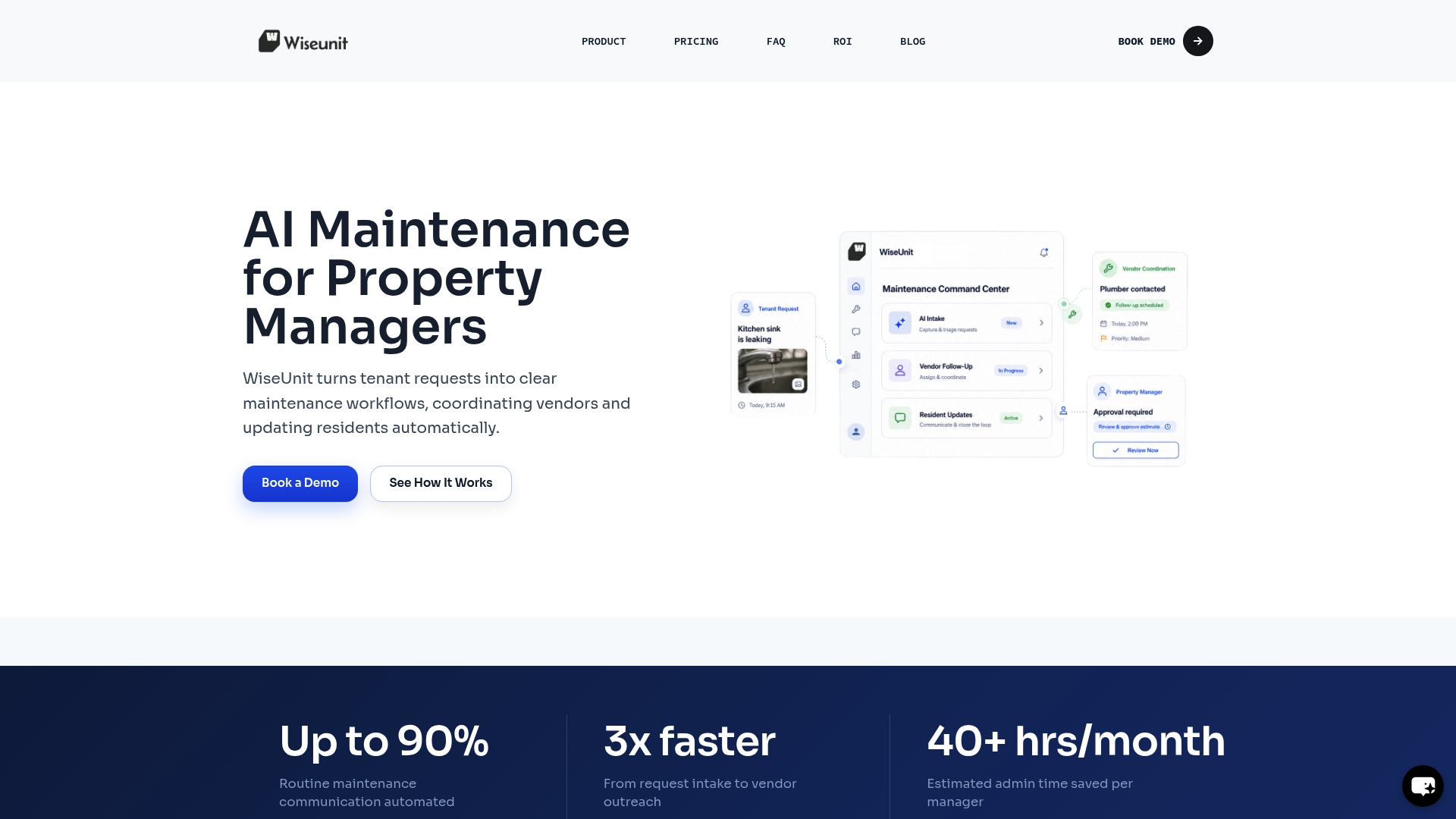
Tenants can submit requests by call, SMS, or online form. Wiseunit automatically triages the issue, coordinates with vendors, sends status updates to tenants, and logs everything in your property management system, whether that is AppFolio, Buildium, or Yardi. You stay in control of decisions while the platform handles the coordination layer that consumes most of your time.
For landlords evaluating whether self-management is financially worth it, the ROI calculator gives you a concrete estimate based on your portfolio size and current costs. You can also start for free and see how the workflow fits your operation before committing to anything.
FAQ
Why do landlords prefer to handle maintenance themselves?
The primary motivation is cost. Management fees of 8-12% of monthly rent add up quickly, and self-managing landlords retain that margin while keeping direct control over vendor quality and repair standards.
Why do landlords miss maintenance requests?
Most missed requests result from fragmented tracking systems rather than negligence. When requests come in through multiple channels with no centralized log, items fall through the cracks without the landlord realizing it.
Why do landlords need maintenance records?
Detailed records protect landlords in two ways: they demonstrate legal compliance with response time requirements, and they provide timestamped evidence to resolve disputes over damage, repairs, and security deposit deductions.
What are the biggest risks of DIY maintenance management?
The hidden costs include time investment, preventable repair escalation, and tenant turnover from poor communication. Tenant satisfaction drops more from inconsistent communication than from repair delays, making workflow structure as important as technical skill.
When should a landlord stop self-managing maintenance?
Consider transitioning when response times consistently exceed your own standards, vendor relationships are unstable, or you are spending more than 10 hours per unit per month on coordination. At that point, the cost of DIY often exceeds the savings from avoiding management fees.
Recommended
- Property Management Maintenance Workflow: Step-by-Step Process to Reduce Workload (Toronto, Dallas, Phoenix)
- AI Maintenance Coordination Software for Property Managers | WiseUnit AI
- WiseUnit AI Blog | Maintenance Operations Insights
- Property Management Maintenance Operations: How to Scale Without Hiring (Toronto, Dallas, Phoenix)