

Property management company compliance is one of those topics that looks simple on the surface until you're staring down a Fair Housing complaint or a tenant dispute over a heating failure. Most property managers understand that compliance exists, but far fewer have a clear picture of what it actually covers, what the penalties look like, and how to build processes that hold up under scrutiny. This guide breaks down the full scope of property management compliance, from legal obligations in the US and Canada to the recordkeeping and maintenance workflows that keep your operations protected and your tenants informed.
Table of Contents
- Understanding property management compliance: legal and maintenance obligations
- The risks and penalties of non-compliance in property management
- Key compliance processes: record-keeping, inspections, and tenant communication
- Comparing US and Canadian compliance frameworks
- Applying compliance in property management: technology and best practices
- Why mastering compliance is your competitive advantage in property management
- Streamline your compliance with WiseUnit AI maintenance coordination software
- Frequently asked questions
Key Takeaways
| Point | Details |
|---|---|
| Compliance is mandatory | Property management compliance involves strict legal and maintenance obligations in both the US and Canada. |
| Recordkeeping matters | Proper documentation of tenant interactions and maintenance is critical to demonstrate fair, consistent practices. |
| Regular inspections | Perform quarterly property inspections to ensure safety, habitability, and reduce legal risks. |
| Leverage technology | Use AI and software tools to automate compliance workflows and reduce manual workload. |
| Compliance is an asset | Mastering compliance builds trust, avoids penalties, and supports scalable property management operations. |
Understanding property management compliance: legal and maintenance obligations
Compliance in property management means meeting every legal, operational, and ethical obligation that governs how you manage rental properties and interact with tenants. That covers a wide range of requirements, and the specifics depend heavily on your jurisdiction.
In the United States, the Fair Housing Act (FHA) is the foundation. It prohibits discrimination in tenant selection, advertising, lease terms, and ongoing tenancy based on race, color, national origin, religion, sex, familial status, and disability. Beyond tenant selection, the FHA shapes how you handle accommodation requests, how you word rental listings, and how consistently you enforce lease policies across your portfolio. HUD requires property managers to retain application and accommodation records for three years to demonstrate consistent, non-discriminatory practices.
In Canada, compliance is governed at the provincial level. Alberta's Residential Tenancies Act and Ontario's Residential Tenancies Act each set specific rules around habitability, repair timelines, and tenant rights. Canadian landlords must meet heating, plumbing, and safety minimum standards with timely repairs under provincial laws. Failing to provide adequate heat in winter, for example, is not just a tenant complaint. It is a legal violation.
Across both countries, property management compliance includes:
- Fair housing and non-discrimination obligations covering advertising, tenant screening, and lease enforcement
- Habitability standards requiring functioning heat, plumbing, electrical systems, and structural safety
- Safety feature requirements such as working smoke detectors, carbon monoxide alarms, and fire exits
- Maintenance response timelines tied to the severity of the issue
- Recordkeeping of applications, leases, inspection reports, accommodation requests, and maintenance logs
Your maintenance operations guide is a good starting point for understanding how these obligations connect to your day-to-day workflows.
The risks and penalties of non-compliance in property management
Having established the obligations, it is crucial to understand the significant risks involved if compliance is neglected.
Non-compliance is not just a paperwork problem. The financial and reputational consequences are serious, and they compound quickly. In the US, Fair Housing violations are enforced by HUD and can result in civil penalties, mandatory training, and lawsuits from affected tenants. Civil penalties for Fair Housing violations can reach up to $108,315 for repeat offenses within seven years. That figure does not include legal fees, settlements, or the cost of operational disruption.
In Canada, the risks look different but are equally real. Ontario, for example, requires licensing for condominium managers. Ontario's CMRAO requires licensed condominium managers who must comply with codes of ethics, with penalties for violations including license suspension or revocation.
Non-compliance rarely happens all at once. It builds gradually through missed inspections, inconsistent documentation, and slow maintenance responses until a single tenant complaint exposes the entire gap.
Beyond fines, non-compliance creates operational drag. Tenant disputes escalate into tribunal hearings. Reputational damage affects vacancy rates. And when your team is scrambling to reconstruct records after a complaint is filed, you are spending time and money that could have been avoided entirely.
The good news is that most compliance failures are preventable. Strong maintenance compliance operations built around consistent documentation and timely responses eliminate most of the exposure before it becomes a legal issue.
Key compliance processes: record-keeping, inspections, and tenant communication
With an understanding of risks, let's explore the concrete processes that keep property managers compliant, efficient, and tenant-focused.
Compliance does not happen through good intentions. It happens through repeatable processes. Here are the core operational areas you need to get right.
1. Recordkeeping
Every compliance program starts with documentation. You need organized, accessible records for:
- Tenant applications and denial notices (with documented reasons)
- Accommodation and modification requests, including your responses
- Signed leases and all amendments
- Inspection reports with dates, findings, and sign-offs
- Maintenance requests, vendor assignments, and completion confirmations
- All written and logged communications with tenants
These records are your defense in any dispute. Without them, you are relying on memory in a legal environment that demands evidence.
2. Scheduled property inspections
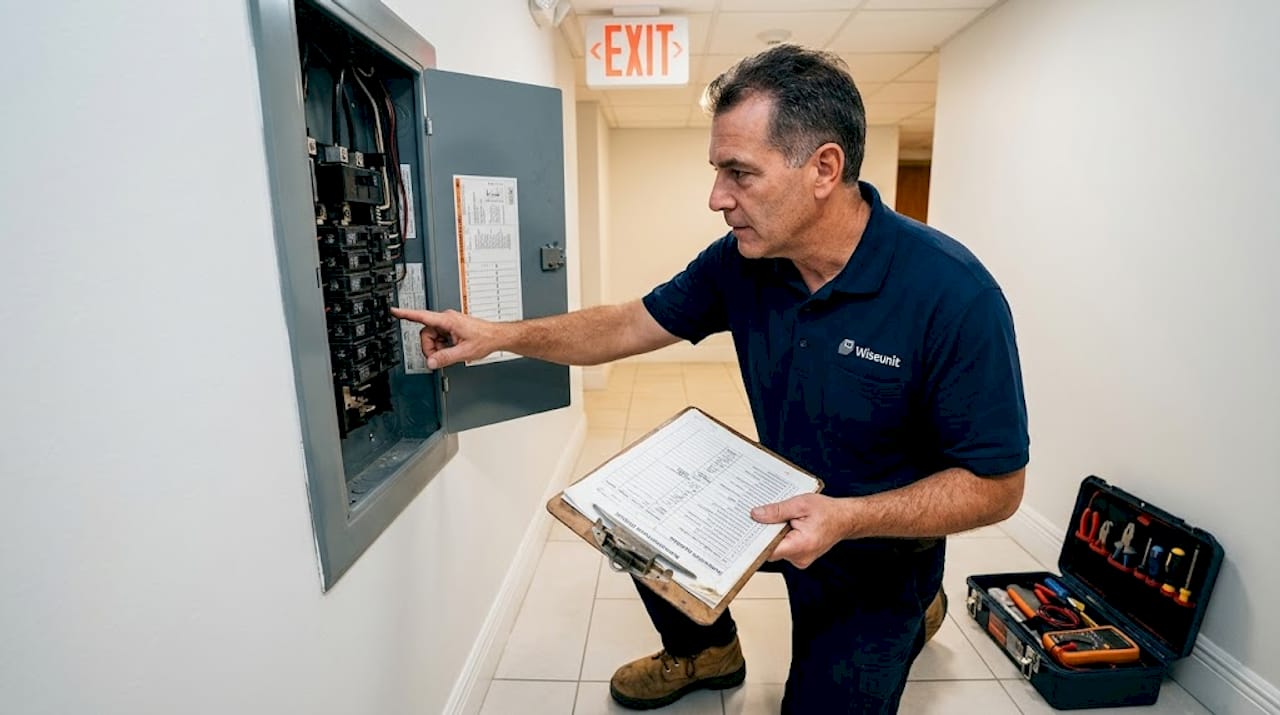
Quarterly property inspections covering electrical, plumbing, HVAC, and safety systems are recommended to ensure habitability and compliance. Quarterly is the standard, but some jurisdictions or property types require more frequent checks. Every inspection should produce a written report that is filed and retained.
3. Tenant communication
Clear, documented communication with tenants is both a compliance requirement and a service standard. When a tenant submits a maintenance request, they need to know it was received, when it will be addressed, and who is handling it. Silence creates disputes. Documented responses create protection.
Responding to mold reports within 24 to 48 hours is critical to avoid habitability claims, especially regarding black mold. The same urgency applies to heating failures, water leaks, and any safety-related issue.
4. Automation and centralization
Manual compliance management breaks down at scale. The more units you manage, the harder it is to track inspection schedules, maintenance timelines, and communication logs without a centralized system. Automation tools built into your maintenance workflow guide can handle reminders, status updates, and documentation automatically.
Pro Tip: Build your compliance calendar into your property management software. Set automatic reminders for inspection due dates, lease renewals, and required notice periods so nothing falls through the cracks.
| Compliance area | Recommended frequency | Documentation required |
|---|---|---|
| Property inspections | Quarterly | Written report with findings |
| Maintenance request follow-up | Within 24 to 48 hours for urgent issues | Request log, vendor assignment, completion record |
| Tenant communication logs | Ongoing | Written or system-logged records |
| Record retention | Minimum 3 years | Applications, leases, accommodation requests |
| Staff compliance training | Annually | Training attendance and materials |
For teams scaling maintenance operations across larger portfolios, centralizing these processes is not optional. It is the only way to maintain consistency.
Comparing US and Canadian compliance frameworks
Understanding compliance processes sets the stage for appreciating how regulations vary across North America and how that affects your practices.
The regulatory environments in the US and Canada share common goals around habitability and tenant protection, but they differ significantly in structure, enforcement, and specifics.
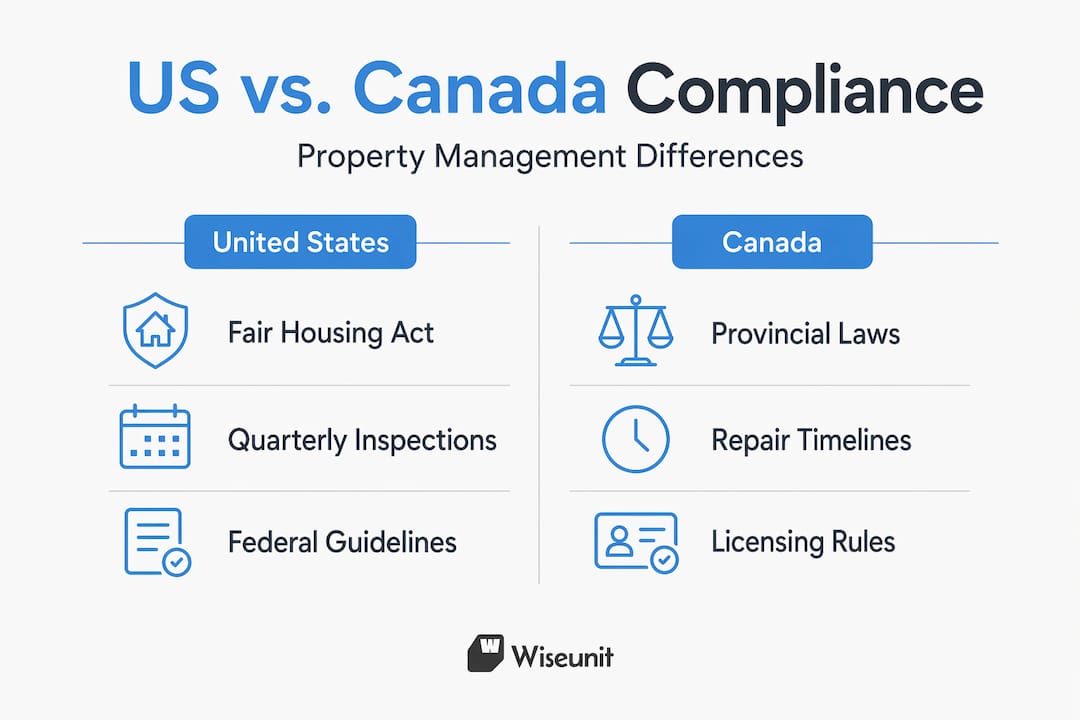
| Compliance area | United States | Canada |
|---|---|---|
| Primary law | Fair Housing Act (federal) | Provincial tenancy acts (Alberta, Ontario, BC, etc.) |
| Non-discrimination rules | Federal protected classes under FHA | Provincial human rights codes |
| Maintenance standards | Implied warranty of habitability | Explicit provincial standards with timelines |
| Manager licensing | Varies by state | Required in some provinces (e.g., Ontario condos) |
| Record retention | 3 years under HUD guidelines | Varies by province, typically 2 to 3 years |
| Penalty structure | Civil fines up to $108,315 for repeat violations | License penalties, tribunal orders, fines |
Alberta and Ontario laws stipulate specific heating requirements, repair timelines, and licensing for managers. In Ontario, for example, landlords must provide heat to at least 20 degrees Celsius from September 1 to June 15. That is not a guideline. It is a legal requirement with enforcement teeth.
On the US side, civil penalties under HUD enforcement apply to Fair Housing violations regardless of whether the discrimination was intentional. Inconsistent lease enforcement, even without discriminatory intent, can trigger a complaint.
Key differences to keep in mind:
- US compliance centers heavily on non-discrimination and consistent policy application across all tenants
- Canadian compliance places more emphasis on specific maintenance timelines and habitability standards written directly into law
- Both systems require safety features like smoke detectors and heating, but the enforcement mechanisms differ
- Licensing requirements are more structured in certain Canadian provinces than in most US states
Pro Tip: If you manage properties in multiple provinces or states, build jurisdiction-specific compliance checklists. A single generic checklist will miss requirements that vary by location. Reviewing maintenance backlog solutions can also help you identify where your current processes fall short.
Applying compliance in property management: technology and best practices
Knowing the regulatory landscape, let's discuss practical methods and tools that make compliance achievable and efficient.
Compliance management used to mean filing cabinets and manual checklists. That approach does not scale, and it creates gaps that become liabilities. Technology closes those gaps.
Using software like AppFolio or Buildium cuts manual workflows by automating reminders and centralizing communications. When maintenance requests, inspection records, and tenant communications all live in one system, your compliance documentation builds itself as work gets done.
Here is what a technology-supported compliance program looks like in practice:
- Automated maintenance intake captures tenant requests via call, SMS, or online form and logs them immediately
- Triage and prioritization flags urgent issues like heating failures or mold reports for same-day response
- Vendor coordination is tracked within the system, creating a documented chain of custody for every repair
- Tenant updates go out automatically at key milestones, reducing inbound calls and creating communication records
- Inspection scheduling triggers reminders based on your compliance calendar, not someone's memory
Recurring staff training on Fair Housing and local ordinances is recommended to maintain compliance. Technology handles the operational layer, but your team still needs to understand the rules they are working within. Annual training on fair housing laws, local ordinances, and your internal procedures keeps everyone aligned.
Pro Tip: Do not treat your property management software as just a ticketing system. Configure it to capture the data points that matter for compliance: response times, resolution dates, vendor notes, and tenant communication timestamps. That data is your audit trail.
For a deeper look at how AI changes the equation, the comparison between software vs AI execution and a review of AI property management platforms are worth your time.
Why mastering compliance is your competitive advantage in property management
Most property managers treat compliance as overhead. Something to manage, minimize, and get through. That framing costs you more than you realize.
The companies that build genuine compliance programs, not just checklists, but documented processes with real audit trails, win in ways that go beyond avoiding fines. Tenants notice when maintenance requests are handled quickly and communicated clearly. Owners notice when their properties are managed without legal exposure. Both groups stay longer and refer others when they trust the management company they are working with.
Compiling compliance files before eviction or dispute wins 90% of legal cases by proving procedural adherence. That statistic reframes what compliance documentation actually is. It is not paperwork. It is your strongest operational asset.
There is also a scaling argument. Property management companies that rely on manual compliance processes hit a ceiling. You can only manage so many units before the volume of inspections, maintenance logs, and communication records overwhelms your team. Automation does not just reduce manual work. It makes growth possible without proportional headcount increases.
The companies growing their portfolios without growing their headcount are not working harder on compliance. They are building systems that handle compliance as a byproduct of normal operations. Every maintenance request that gets logged, triaged, and resolved through a structured workflow automatically produces the documentation you need. That is what maintenance operations insights consistently show across high-performing portfolios.
Compliance is not a burden you manage. It is a standard you build into how you operate. The difference between those two mindsets shows up in your legal exposure, your tenant retention, and your ability to scale.
Streamline your compliance with WiseUnit AI maintenance coordination software
As compliance complexities grow, WiseUnit AI offers a practical, scalable way to manage maintenance and stay current with documentation requirements.
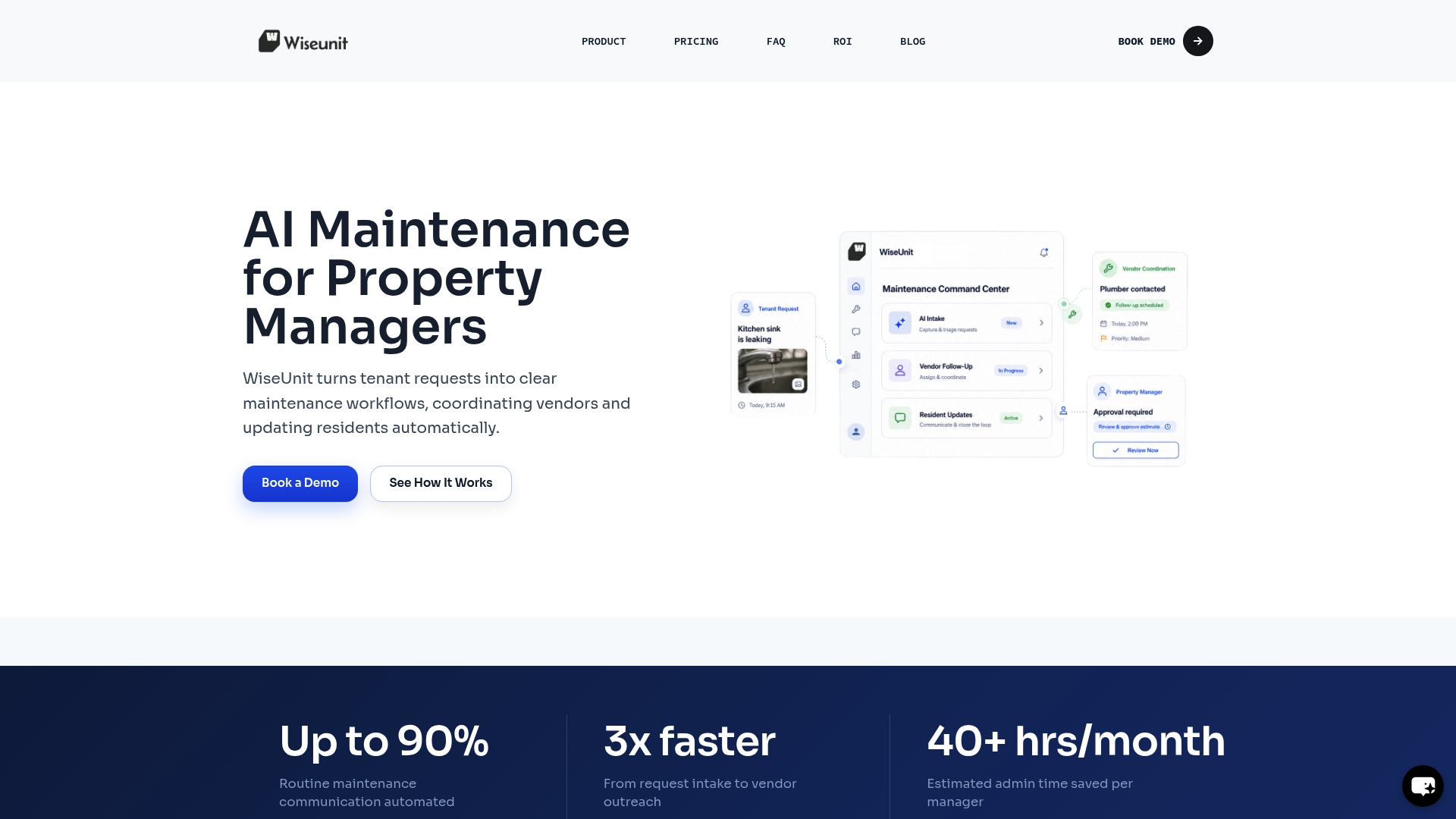
WiseUnit AI automates the full maintenance workflow from tenant intake through vendor coordination, scheduling, and follow-up, while keeping every step logged and accessible. That means your compliance documentation builds automatically as work gets done, without your team manually updating records or chasing vendors for status.
The platform centralizes tenant communication logs, maintenance histories, and inspection records in one place, giving you the audit trail you need for fair housing compliance and habitability disputes. Teams managing multifamily, single-family, and HOA portfolios use WiseUnit to cut manual coordination work by up to 70% while improving response times and tenant satisfaction. Start your free trial to see how it fits your current workflows, or use the ROI calculator to estimate the time and cost savings for your portfolio size.
Frequently asked questions
What documents are essential for property management compliance?
You must keep tenant applications, denial notices, accommodation requests, leases, maintenance logs, inspection reports, and communication records. HUD guidelines require record retention for at least three years to demonstrate fair housing compliance.
How often should property inspections occur to meet compliance?
Quarterly inspections covering major systems like plumbing, HVAC, electrical, and safety devices are recommended to ensure habitability and legal compliance across most jurisdictions.
What are the penalties for violating Fair Housing Act compliance in the US?
Civil penalties can reach $21,663 for a first violation and $108,315 for repeat violations within seven years, plus potential lawsuits and mandatory corrective actions.
Can Canadian landlords avoid repair obligations through lease clauses?
No. Canadian landlords cannot waive habitability obligations through lease clauses. Tenants can request inspections or seek tribunal orders if repairs are delayed beyond legal timeframes.
Recommended
- Property Management Maintenance Operations: How to Scale Without Hiring (Toronto, Dallas, Phoenix)
- Vendor Management for Property Management: Systems, KPIs & Scaling Guide (2026)
- Maintenance Backlog in Property Management: Causes, Costs & How to Fix It (2026)
- Property Management Software vs AI Execution: Why Software Alone Is No Longer Enough