

Property management client retention strategies are the targeted operational practices property managers use to keep tenants satisfied, reduce turnover, and drive consistent lease renewals. In the rental housing industry, these strategies span proactive communication, responsive maintenance, and technology-assisted relationship management. The cost of replacing a tenant, factoring in vacancy days, marketing, and unit prep, far exceeds the cost of keeping one. Property managers who treat retention as an active operational discipline, not an annual reporting task, consistently outperform those who react only when tenants give notice.
1. Proactive communication tactics that drive tenant retention
Communication that anticipates tenant needs before problems arise prevents dissatisfaction more effectively than reactive service. The most impactful tenant interactions happen before tenants have a reason to complain. That distinction separates high-retention portfolios from average ones.
The most effective communication framework uses a structured check-in timeline:
- 30-day check-in: Confirm the tenant has settled in, address any early friction points, and set expectations for ongoing service.
- 90-day check-in: Gauge satisfaction, identify any unresolved maintenance concerns, and reinforce the relationship before it goes cold.
- Pre-renewal check-in (60 to 90 days before lease end): Open the renewal conversation early. Practitioners use a renewal risk timeline at these intervals specifically to identify and mitigate exit risks before tenants start searching elsewhere.
A 24-hour response standard for non-emergency tenant communications sets clear expectations and builds trust over time. Response-time commitments function as behavioral contracts. Failing to meet them without a proactive update erodes tenant confidence faster than the original delay itself.
Accessibility also matters legally and operationally. ADA compliance mandates accessible communication methods tailored to each person's needs and context, including auxiliary aids and trained staff. Property managers overseeing multifamily or mixed portfolios should audit their communication channels against these requirements annually.

Pro Tip: Set calendar reminders for each tenant's 30-day, 90-day, and pre-renewal check-ins at lease signing. Doing it at the start eliminates the risk of forgetting during busy leasing seasons.
2. How prompt and preventive maintenance reduces tenant churn
Maintenance response is the single most visible measure of your service quality in a tenant's eyes. A tenant who waits two weeks for a leaking faucet repair will not renew, regardless of how pleasant the leasing experience was. Proactive maintenance schedules and preventive upkeep reduce HVAC-related complaints by 38%, and HVAC issues rank among the top drivers of non-renewal decisions.
The operational standard that separates high-retention portfolios is not just speed. It is communication during the repair process. Tenants tolerate delays when they receive honest timelines and regular updates. They do not tolerate silence. Communicating maintenance and repair timelines clearly builds the kind of resident trust that translates directly into renewals.
A preventive maintenance schedule for a typical multifamily portfolio should include:
- HVAC filter replacements and system checks every 90 days
- Gutter cleaning twice annually before rainy seasons
- Roof and exterior inspections each spring
- Plumbing pressure checks and water heater inspections annually
- Common area lighting and safety system audits quarterly
IoT-enabled sensors and predictive maintenance platforms take this further by detecting early signs of equipment failure before tenants notice any impact. A water leak sensor that alerts your team before a ceiling collapses is not just a cost-saving tool. It is a retention tool, because the tenant never experiences the disruption.
Pro Tip: Build your preventive maintenance calendar inside your property management system so work orders generate automatically. Manual scheduling creates gaps; automated scheduling creates consistency.
3. Technology and automation tools that optimize retention efforts
Modern property management client retention strategies depend on software that tracks tenant data, automates touchpoints, and surfaces risk signals before they become vacancies. Property management systems like AppFolio, Buildium, and Yardi serve as the operational backbone for tracking lease dates, maintenance histories, and tenant communication logs. When integrated with AI-driven maintenance coordination, these platforms move from passive record-keeping to active workflow execution.
Automated communication tools, including chatbots and AI-driven workflows, handle FAQs and escalate serious issues, reducing response times and staff burnout. Text updates and automated notifications improve response quality and tenant satisfaction substantially. This matters at scale: a team managing 500 units cannot manually send status updates on every open work order without burning out coordinators.
Here is how key technology categories compare in their retention impact:
| Tool category | Primary retention function | Example platforms |
|---|---|---|
| Property management software | Lease tracking, tenant records, work order logging | AppFolio, Buildium, Yardi |
| AI maintenance coordination | Workflow execution, vendor dispatch, tenant updates | Wiseunit |
| CRM systems | Renewal pipeline management, communication history | HubSpot, Salesforce |
| Tenant communication apps | Self-service requests, automated notifications | Buildium Resident Portal |
| IoT and predictive tools | Early issue detection, preventive alerts | SmartRent, Sensor Industries |
The practical advantage of automating maintenance workflows is not just speed. It is consistency. Every tenant gets the same quality of communication and follow-up regardless of which coordinator is on duty or how busy the week is. Consistency is what tenants remember when renewal time arrives.
4. Key retention metrics every property manager should monitor
Tenant retention rate, or TRR, is the percentage of tenants who renew their leases within a given period. It is the headline metric for any retention program, but it tells you what happened, not why. The supporting metrics explain the why and give you time to act.
Monthly tracking of TRR and related KPIs is the operational standard for teams serious about retention. Annual reviews only reveal problems after they have compounded. Monthly reviews catch dips early enough to intervene.
| Metric | What it measures | Why it matters |
|---|---|---|
| Tenant retention rate (TRR) | Percentage of leases renewed | Headline indicator of overall retention health |
| Maintenance turnaround time | Hours or days from request to resolution | Directly tied to tenant satisfaction and renewal decisions |
| Response time | Time from tenant contact to first reply | Signals service quality and operational responsiveness |
| Days on market | Average vacancy duration after move-out | Measures the cost of retention failures |
| Rent collection rate | Percentage of rent collected on time | Indicates tenant financial stability and relationship quality |
Move-out reason analysis is the most underused metric in property management. Tracking why tenants leave, and logging it consistently in a churn log, reveals patterns that aggregate data cannot. If 40% of your non-renewals cite maintenance delays, that is an operational problem, not a market problem. Viewing tenant retention as an ongoing operational control rather than an annual report transforms how your team prioritizes daily decisions.
5. How financial services and resident benefits build tenant loyalty
Financial service satisfaction increases referral likelihood by 97%, making tenant benefits packages one of the highest-leverage retention tools available to property managers. Tenants who feel financially supported by their property management company are far more likely to renew and recommend the property to others.
Effective benefits packages for renters in 2026 include:
- Rent reporting services that help tenants build credit history through on-time payments, a benefit that costs the property manager nothing but creates real value for the tenant.
- Renters insurance programs offered at group rates through partnerships with providers like Assurant or Jetty.
- Flexible payment options that accommodate tenants with irregular income schedules without triggering late fees.
- Package management solutions that reduce porch theft and missed deliveries, a growing frustration in multifamily buildings. A structured package management program directly improves day-to-day tenant satisfaction.
Sustainability initiatives such as recycling programs and community green projects increase tenant satisfaction and encourage lease renewals among eco-conscious renters. Green programs also reduce utility costs and create community engagement that strengthens the social fabric of a building. Tenants who feel connected to their community are significantly less likely to move.
The underlying principle is that tenants renew when they perceive the total value of staying to exceed the total cost of leaving. Financial and lifestyle benefits shift that calculation in your favor without requiring rent concessions.
Key takeaways
Effective property management client retention strategies combine proactive communication, preventive maintenance, and monthly metric tracking into a single operational discipline that reduces churn and improves long-term portfolio profitability.
| Point | Details |
|---|---|
| Proactive communication wins | Schedule tenant check-ins at 30, 90, and pre-renewal days to prevent dissatisfaction before it starts. |
| Maintenance speed and transparency | Preventive schedules and clear repair timelines reduce HVAC complaints by 38% and build renewal trust. |
| Technology drives consistency | AI coordination tools and property management platforms like AppFolio and Buildium deliver uniform service at scale. |
| Monthly metrics catch problems early | Track TRR, turnaround time, and move-out reasons monthly to act before churn compounds. |
| Benefits packages increase referrals | Financial services and sustainability programs increase referral likelihood by 97% and shift the renewal calculus. |
What I've learned about retention that most guides skip
Most retention articles focus on tactics in isolation. Add a benefits package here, send a check-in email there. What they miss is that retention is a system, and systems fail when any single component is inconsistent.
The property managers I have seen retain tenants at the highest rates share one habit: they treat their response-time commitments as non-negotiable. Not aspirational. Non-negotiable. When a repair is delayed, they call the tenant before the tenant calls them. That single behavior, proactive updates on open issues, does more for renewal rates than any loyalty program.
The second thing most guides undervalue is the move-out interview. Most teams collect this data and file it. The teams that actually use it, reviewing churn logs monthly and mapping patterns to specific properties or coordinators, find fixable problems that aggregate metrics hide. One portfolio I reviewed had a 60% non-renewal rate in a single building. The churn log showed that 70% of those tenants cited slow maintenance response. The fix was operational, not financial.
Technology is genuinely useful here, but only when it executes, not just tracks. A maintenance workflow system that automatically dispatches vendors, updates tenants, and logs completion inside your property management system removes the human error that breaks consistency. The goal is not to replace the relationship. It is to protect it by making sure the operational side never lets the relationship down.
Retention is not a tenant relations problem. It is an operations problem dressed in tenant relations clothing.
— Laur
How Wiseunit helps property managers retain more tenants
Property managers who want to improve tenant satisfaction without adding headcount need an execution layer, not just another tracking tool. Wiseunit is an AI maintenance coordination platform built specifically for property management companies managing multifamily, single-family, and HOA portfolios.
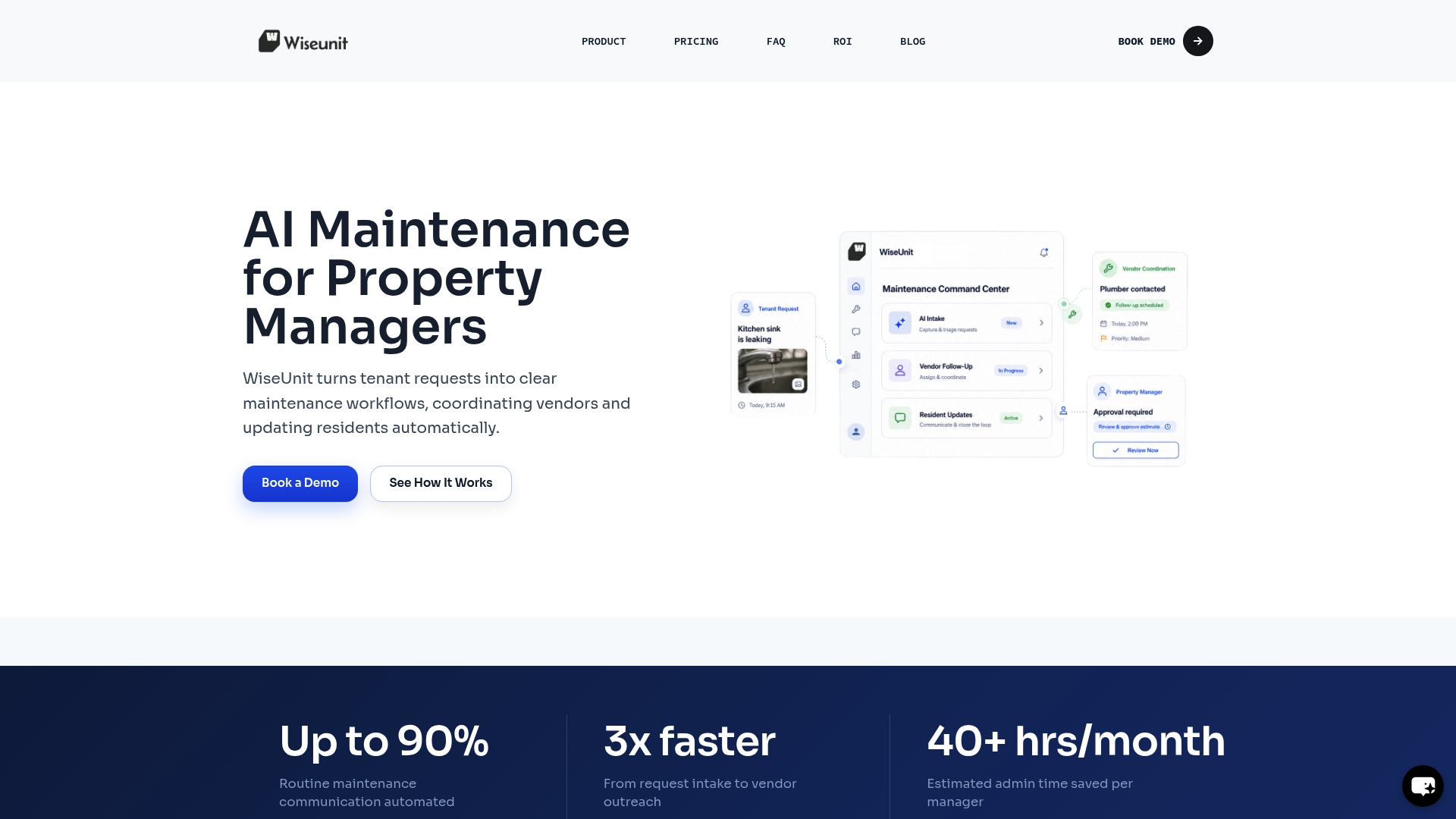
Wiseunit handles the full maintenance workflow from tenant intake through vendor coordination, scheduling, follow-ups, and status updates inside AppFolio, Buildium, or Yardi. Tenants submit requests by call, SMS, or online form. Wiseunit triages the issue, coordinates the vendor, and keeps everyone updated automatically. The result is faster response times, fewer missed follow-ups, and a tenant experience that supports renewal decisions. Explore Wiseunit's AI platform or use the ROI calculator to see what faster maintenance response is worth to your portfolio.
FAQ
What are property management client retention strategies?
Property management client retention strategies are the operational practices property managers use to keep tenants satisfied and encourage lease renewals. They include proactive communication, preventive maintenance, technology automation, and tenant benefits programs.
How often should property managers review retention metrics?
Monthly review of retention metrics is the standard for effective operational control. Annual reviews reveal problems too late to prevent compounding churn.
What is the most common reason tenants do not renew?
Slow or poorly communicated maintenance response is consistently cited as a top driver of non-renewal. Preventive maintenance schedules and clear repair timelines directly address this issue.
How does technology improve tenant retention?
AI-driven tools and property management platforms like AppFolio, Buildium, and Yardi automate communication, track renewal timelines, and execute maintenance workflows. This consistency at scale is what prevents the service gaps that drive tenants to leave.
What tenant benefits have the strongest impact on retention?
Rent reporting services, renters insurance, and flexible payment options rank among the highest-value benefits for renters. Financial service satisfaction increases referral likelihood by 97%, making benefits packages a direct retention and acquisition tool.