

Mixed-portfolio property management is defined as the specialized oversight of real estate assets combining two or more distinct use types, such as residential apartments alongside retail storefronts or office suites, within a single portfolio or building. Unlike single-use management, this discipline requires parallel administrative tracks covering residential tenancy law, commercial lease standards, and distinct compliance regimes simultaneously. The National Property Management Authority and NAI Global both recognize this as a fundamentally separate operational category, not simply a variation of standard property management. If you own or manage assets that mix uses, the strategies in this guide apply directly to your situation.
What is mixed-portfolio property management and how does it differ?
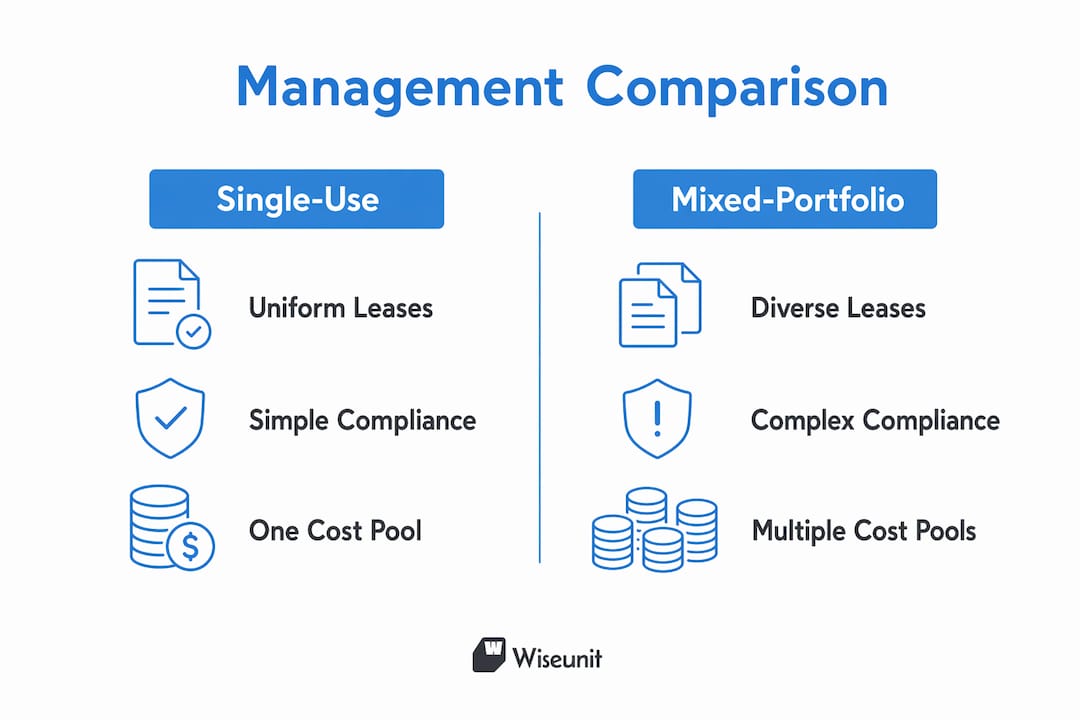
Mixed-portfolio property management is the coordinated oversight of properties that combine residential, commercial, retail, or industrial uses under one operational structure. The industry term most commonly applied is mixed-use property management, and both phrases describe the same discipline. What separates it from conventional management is not scale but structural complexity. A manager handling a 200-unit apartment building faces one legal framework, one lease type, and one tenant profile. A manager handling a building with 80 apartments above six retail units faces at least two of everything.
The core operational scope includes financial reporting, compliance tracking, lease administration, and maintenance coordination across each use type. These tracks do not merge cleanly. Residential tenants have statutory protections under state landlord-tenant law, while commercial tenants negotiate lease terms under contract law with far fewer statutory defaults. Managing both simultaneously means your team must be fluent in both frameworks without confusing them.

NAI Global describes the mindset required as thinking like a "small city manager." That framing is precise. You are not just collecting rent from different tenants. You are governing a micro-economy where the success of one tenant class directly affects the experience and retention of another.
How structural and regulatory complexity sets mixed-portfolio management apart
The regulatory layer is where most investors underestimate the difficulty. Properties with two or more IBC occupancy classifications trigger separate building code requirements for each use type, meaning fire egress, sprinkler systems, and occupancy load calculations must satisfy multiple sets of standards within the same structure. A single code violation in the commercial portion can affect the certificate of occupancy for the residential floors above it.
Legal compliance spans the Americans with Disabilities Act for commercial spaces, the Fair Housing Act for residential units, and fire safety codes that apply differently depending on occupancy type. These are not overlapping rules. They are parallel mandates, each with its own enforcement agency, inspection schedule, and penalty structure. Missing one does not excuse the other.
Lease structure heterogeneity adds another layer. Residential leases typically run 12 months with standardized terms. Commercial NNN leases run 3 to 10 years with negotiated CAM (common area maintenance) provisions, exclusivity clauses, and co-tenancy requirements. Tracking both in the same system without a clear separation of logic creates reconciliation errors that compound over time.
Pro Tip: Set up separate ledger accounts for each occupancy type from day one. Mixing residential and commercial financials into a single chart of accounts is the single most common source of CAM reconciliation disputes and audit failures in mixed-use portfolios.
Utility metering is a practical example of this complexity. Residential tenants often pay a flat utility rate or have individually metered units. Commercial tenants may negotiate sub-metered electricity tied to their hours of operation. Coordinating both billing structures, while allocating shared mechanical system costs fairly, requires a metering strategy defined before leases are signed, not after.
How to align diverse tenant needs and govern shared spaces effectively
The central tension in mixed-use property management is that residential and commercial tenants want fundamentally different things from the same building. Residential tenants prioritize quiet enjoyment, predictable maintenance, and privacy. Commercial tenants prioritize foot traffic, delivery access, signage visibility, and extended operating hours. Left unmanaged, these interests collide.
Effective governance starts with written policies before conflicts arise. Here is a practical framework for managing shared space in mixed-use properties:
- Define operating hours in every commercial lease. Specify delivery windows, trash removal schedules, and noise thresholds. Attach these as lease exhibits, not informal agreements.
- Separate common area cost pools by use type. Residential tenants should not subsidize lobby upgrades that primarily benefit retail traffic, and commercial tenants should not fund amenity spaces used exclusively by residents.
- Create a tenant communication protocol. Designate a single point of contact for each tenant class and establish response time standards for maintenance requests, complaints, and building notices.
- Schedule regular property walkthroughs. Monthly inspections of shared corridors, loading docks, and mechanical rooms catch friction points before they become formal disputes.
- Document every conflict and resolution. A written record protects you legally and helps identify patterns that signal a policy gap.
Separate cost pools with consistent allocation logic are the structural backbone of fair CAM billing. When a commercial tenant challenges a CAM charge, your defense is the documented methodology, not a verbal explanation. Transparency in cost allocation also reduces the frequency of disputes, because tenants who understand the formula are less likely to contest the result.
Pro Tip: Use a property management portal that gives each tenant class a separate communication channel and document library. Residential and commercial tenants should never see each other's lease terms, billing details, or maintenance histories.
What financial and operational best practices maximize profitability
Financial discipline in mixed-portfolio management requires treating each asset class as a distinct business unit within the same property. Separate budgets, separate performance metrics, and separate capital expenditure plans for residential and commercial components give you accurate data on which use type is generating returns and which is underperforming.
| Practice | Single-Use Portfolio | Mixed-Portfolio |
|---|---|---|
| Lease tracking | One lease type, one renewal cycle | Multiple lease types, staggered expirations |
| CAM reconciliation | Not applicable or simple | Required annually per commercial tenant |
| Financial reporting | Single ledger | Separate ledgers per use type |
| Maintenance scheduling | Unified schedule | Separate schedules by occupancy type |
| Compliance tracking | One regulatory framework | Multiple parallel frameworks |
Cash flow resilience is one of the genuine advantages of mixed-portfolio investment strategies. When the residential rental market softens, commercial rents on long-term NNN leases continue. When retail vacancy rises, stabilized residential income offsets the gap. This income diversification is only realized, however, if your financial reporting is granular enough to identify which component is carrying the portfolio at any given time.
Lease mix optimization is an active management task, not a one-time decision. Monitoring local market demand, tracking competitor vacancy rates, and adjusting your tenant mix in response to neighborhood trends directly affects long-term asset appreciation. A ground-floor retail tenant that drives foot traffic to your building increases the desirability of your residential units. A struggling anchor tenant does the opposite.
Accurate rentable area measurement using BOMA standards is the foundation of defensible CAM reconciliation. If your rent roll uses a different square footage figure than your lease, every CAM calculation built on that number is wrong. Aligning accounting methods, measurement standards, and lease terms from portfolio inception prevents the kind of compounding errors that trigger tenant audits and legal disputes years later.
What technology solutions support mixed-portfolio property management?
Technology is not optional in mixed-portfolio management. The operational complexity of tracking multiple lease types, compliance deadlines, maintenance schedules, and financial reconciliations across use types exceeds what spreadsheets and manual processes can handle reliably.
Platforms like Yardi, Buildium, and Wiseunit AI each address different layers of this complexity. Yardi and Buildium provide unified dashboards for lease tracking, financial reporting, and tenant communication across use types. Wiseunit AI operates as a maintenance execution layer, handling the full workflow from tenant intake through vendor coordination, scheduling, and status updates inside your existing property management system.
Key capabilities to prioritize when evaluating technology for mixed-portfolio operations:
- Separate ledger support for residential and commercial financials within one platform
- CAM reconciliation tools that automate annual calculations and generate tenant-facing reports
- Maintenance workflow automation that routes requests to the correct vendor based on use type and urgency
- Compliance deadline tracking across multiple regulatory frameworks simultaneously
- Tenant communication portals segmented by occupancy type
Wiseunit's approach is worth noting specifically for maintenance coordination. In a mixed-use building, a single maintenance request can involve a commercial tenant's HVAC unit on the ground floor and a residential tenant's plumbing issue on the third floor. These require different vendors, different response time standards, and different billing structures. An AI-driven execution layer that handles triage, vendor dispatch, and follow-up automatically reduces the coordination burden on your team without requiring additional staff.
Pro Tip: When evaluating property management reporting dashboards, confirm that the platform can generate separate performance reports for each use type. A single blended report obscures the data you need to make leasing and capital allocation decisions.
What are the common challenges in mixed-portfolio management and how do you mitigate them?
Complex lease administration, multi-tenant shared spaces, regulatory overlaps, and CAM reconciliation difficulties are the four most consistent sources of operational failure in mixed-use portfolios. Each has a specific mitigation strategy.
- Regulatory conflicts across jurisdictions. Properties spanning multiple municipalities face overlapping code requirements. Assign a compliance calendar to each use type and review it quarterly with a local attorney familiar with both residential and commercial property law.
- Shared space disputes. Noise complaints, delivery conflicts, and parking allocation disputes between residential and commercial tenants are predictable. Address them in lease language before they occur, not in mediation after.
- CAM reconciliation resistance. Commercial tenants routinely audit CAM charges. Maintain a documented methodology, use BOMA-standard measurements, and provide annual reconciliation statements proactively rather than waiting for tenant requests.
- Lease mix imbalance. Over-reliance on one tenant class creates income concentration risk. Review your lease expiration schedule annually and stagger renewals to avoid simultaneous vacancy across multiple units.
- Operational inefficiency from generalist management. Mixed-use portfolios managed by teams without specialized training consistently underperform. Invest in compliance-specific training or partner with a firm that has documented mixed-use experience.
Pro Tip: Review your property management contracts to confirm they explicitly address mixed-use responsibilities. Generic management agreements often exclude CAM administration, compliance tracking across use types, and commercial lease renewal support. These gaps create liability.
Key takeaways
Mixed-portfolio property management succeeds when each use type is governed as a distinct operational unit within a shared financial and compliance structure.
| Point | Details |
|---|---|
| Separate operational tracks | Manage residential and commercial components under distinct legal, financial, and compliance frameworks. |
| Common area governance | Use separate cost pools with documented allocation logic to prevent cross-subsidization and audit disputes. |
| Technology as execution layer | Platforms like Wiseunit AI automate maintenance coordination and reduce manual workload across use types. |
| Lease mix optimization | Actively manage tenant mix and stagger lease expirations to protect cash flow and asset value. |
| Proactive compliance tracking | Assign compliance calendars per use type and review quarterly to prevent regulatory conflicts. |
Why mixed-portfolio management rewards specialists, not generalists
I have reviewed portfolios where the financials looked healthy on paper but were quietly eroding because the management team was applying residential logic to commercial spaces. CAM charges were being calculated on blended square footage. Maintenance requests from retail tenants were being routed through the same queue as apartment work orders, with the same response time standards. The problems were not visible in the monthly report. They showed up in lease renewals that did not happen and commercial tenants who left without explanation.
The honest truth about mixed-portfolio management is that the complexity is not in any single task. It is in the coordination between tasks. Residential lease renewal, commercial CAM reconciliation, and a maintenance request from a ground-floor restaurant can all land on the same day. A generalist team handles each one reactively. A specialized team has a system for each one that runs without constant intervention.
What I find most underappreciated is the compounding value of getting the governance structure right early. Separate cost pools, accurate rentable area measurements, and documented allocation logic are not administrative overhead. They are the foundation that makes every future decision faster and every tenant dispute shorter. Investors who treat these as setup costs rather than ongoing liabilities consistently outperform those who defer the work.
Technology matters here, but only when it matches the operational reality of your portfolio. A platform that tracks tickets is not the same as one that executes workflows. The distinction becomes obvious the first time a commercial HVAC failure and a residential plumbing emergency arrive simultaneously at 11 PM.
— Laur
How Wiseunit supports mixed-portfolio property management teams
Managing maintenance across residential and commercial units in the same portfolio is one of the highest-friction tasks your team faces. Wiseunit operates as an AI-driven maintenance execution layer, handling tenant intake, issue triage, vendor coordination, scheduling, and status updates inside platforms like AppFolio, Buildium, and Yardi.
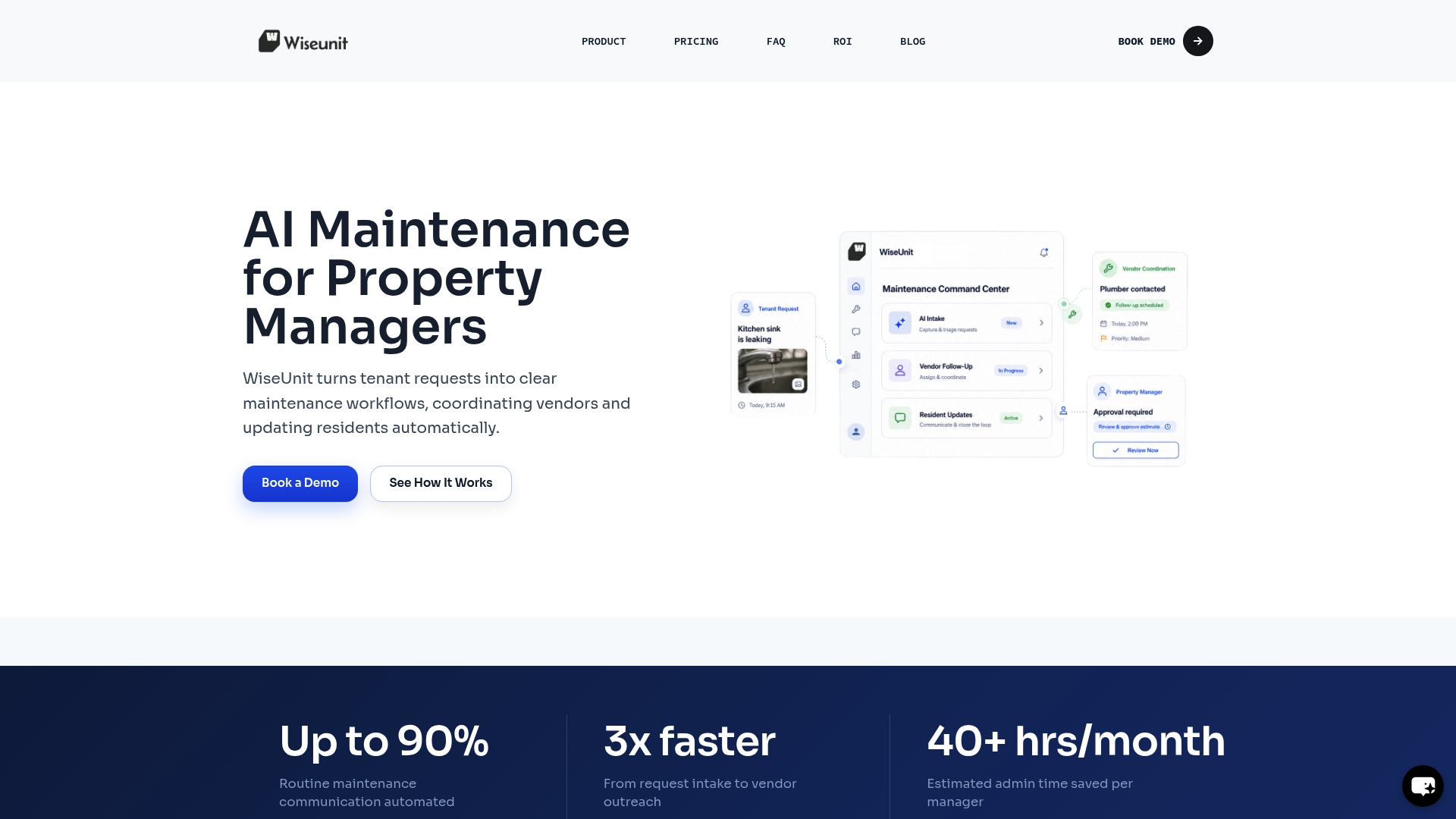
For mixed-use portfolios specifically, Wiseunit routes each maintenance request to the correct vendor based on use type, urgency, and lease terms, without requiring a coordinator to manage the handoff manually. Teams using Wiseunit's AI maintenance coordination reduce response times and handle higher request volumes without adding headcount. Use the ROI calculator to see what that means for your portfolio's operating costs.
FAQ
What is mixed-portfolio property management?
Mixed-portfolio property management is the specialized oversight of real estate assets combining two or more distinct use types, such as residential and commercial, requiring coordinated legal, financial, and operational management across each component.
How does mixed-use property management differ from single-use management?
Single-use management applies one legal framework and one lease type. Mixed-use management requires parallel compliance tracks covering residential tenancy law, commercial lease standards, and separate regulatory regimes simultaneously.
What are the biggest challenges in mixed-portfolio management?
The four most consistent challenges are CAM reconciliation complexity, regulatory overlaps across use types, shared space disputes between residential and commercial tenants, and lease mix imbalance that creates income concentration risk.
What technology is best for managing mixed-use properties?
Platforms like Yardi and Buildium handle lease tracking and financial reporting across use types. Wiseunit AI adds a maintenance execution layer that automates vendor coordination and workflow management for both residential and commercial requests within the same portfolio.
How do you calculate CAM charges fairly in a mixed-use building?
Use BOMA-standard measurements for rentable area, maintain separate cost pools for residential and commercial common areas, document the allocation methodology in each commercial lease, and provide annual reconciliation statements to all commercial tenants.