

Coordinating vendors across a multifamily property sounds manageable until you're juggling a dozen trades, chasing confirmations, and fielding calls from frustrated tenants waiting on a repair that should have been done yesterday. Poor multifamily vendor coordination strategies cost you more than time. Satisfied residents are 23% less likely to move than dissatisfied ones, which means every delayed work order and missed vendor appointment is a direct retention risk. This article breaks down the specific strategies that actually reduce that chaos, organized by where most property management teams break down.
Table of Contents
- Key Takeaways
- 1. Establish a vendor tiering system before anything else
- 2. Automate rules-based vendor matching for work orders
- 3. Build real-time tracking and tenant communication into every job
- 4. Standardize vendor onboarding and compliance tracking
- 5. Define KPIs and conduct structured vendor performance reviews
- My take on where most multifamily vendor coordination breaks down
- How Wiseunit handles vendor coordination so you do not have to
- FAQ
Key Takeaways
| Point | Details |
|---|---|
| Tier your vendors | Segment vendors into strategic, preferred, approved, and transactional categories to focus your management energy where it counts. |
| Automate dispatch | Rules-based matching cuts vendor selection from 15 minutes to seconds, reducing no-shows and improving resolution rates. |
| Communicate proactively | Automated status updates to tenants eliminate the bulk of maintenance-related inbound calls without adding staff. |
| Standardize onboarding | Structured vendor onboarding programs consistently produce compliance rates above 95%, compared to 60-70% with informal methods. |
| Track performance formally | Defined KPIs and regular vendor reviews convert transactional relationships into long-term property management partnerships. |
1. Establish a vendor tiering system before anything else
Most property managers treat vendor coordination as a single, uniform task. Every contractor gets the same level of attention, the same check-in process, the same follow-up cycle. That approach fails because not all vendors require equal management. Applying the same effort to a one-time carpet cleaner as you do to your HVAC contractor wastes time and dilutes focus.
A practical tiering framework for multifamily properties breaks down like this:
- Strategic vendors: HVAC, plumbing, electrical contractors who cover high-spend, high-risk work. These require executive-level relationships, regular performance reviews, and backup plans.
- Preferred vendors: Reliable contractors you use frequently across properties. Managed closely but with less intensity than strategic vendors.
- Approved vendors: Qualified for specific trades but used situationally. Monitor compliance and pricing without deep engagement.
- Transactional vendors: One-off jobs, low spend, low risk. Automated monitoring is enough here.
Strategic vendors typically represent 5-10% of your vendor pool but account for 50-70% of total spend and carry the most operational risk. That ratio tells you exactly where to concentrate your attention.
When selecting and placing vendors into tiers, evaluate them on trade match, geographic coverage, response time history, cost consistency, and license/insurance status. Build a scoring rubric and apply it consistently. The goal is to make placement decisions data-driven, not based on whoever you called last time.

Pro Tip: Create a simple vendor scorecard in a spreadsheet or your property management system. Score each vendor quarterly on response time, completion rate, and complaint rate. Let the scores drive tier changes, not gut feeling.
2. Automate rules-based vendor matching for work orders
Manual vendor selection is one of the most underestimated drains in multifamily maintenance. Selecting a vendor manually takes 12-15 minutes per work order. Multiply that across dozens of requests per week across multiple properties, and you have a coordinator spending half their day just deciding who to call.
Rules-based matching engines solve this by evaluating multiple criteria simultaneously: trade specialty, location, current availability, performance score, and cost. The system selects and notifies the best-fit vendor in seconds, not minutes.
Here is what that kind of automation actually handles in practice:
- Matching the right trade to the right job type automatically (no more calling an electrician for a plumbing issue)
- Sending dispatch notifications via SMS, email, or app simultaneously
- Escalating to the next vendor on the list if the first does not confirm within a set window
- Logging every dispatch action for audit and performance tracking
The no-show problem deserves specific attention. Automated no-show prevention and rapid re-dispatch cut vendor no-show rates from 14% to 4%, saving approximately $65 per unit annually. That is a direct operational cost reduction, not a soft benefit.
One caveat: automation does not work well if your vendor pool is thin or your vendors are not comfortable with digital notifications. A hybrid dispatch approach works better in that case. Run automated notifications first, but build in a manual escalation path so your coordinator can call directly when needed. You get the speed of automation without losing the vendors who respond better to a phone call.
Pro Tip: When setting up automated dispatch, define your escalation windows tightly. A 30-minute confirmation window before re-dispatch keeps jobs moving without penalizing vendors who are legitimately in the field.
3. Build real-time tracking and tenant communication into every job
Communication gaps are where tenant satisfaction erodes fastest. A tenant submits a maintenance request and then hears nothing. They call the office. No one knows the status. They call again the next day. That pattern accounts for a huge share of inbound call volume and drives negative reviews.
The fix is a structured notification sequence attached to every work order. The checkpoints look like this:
- Dispatch confirmation: Tenant receives notification that a vendor has been assigned and given an appointment window.
- Appointment reminder: Automated reminder sent 24 hours and 2 hours before the scheduled time.
- Vendor en route: Notification sent when the vendor confirms they are heading to the unit.
- Work in progress: Optional update for larger jobs that span multiple hours or days.
- Completion confirmation: Tenant notified when work is marked complete, with a satisfaction prompt.
This sequence eliminates the guesswork that drives calls. Automated communication systems reduce maintenance-related phone calls by 71%, freeing your team to handle issues that actually need human judgment.
Deliver these notifications through the tenant's preferred channel. Some tenants respond to SMS, others check email, and an increasing share prefer an app or portal. Offering channel choice is not just a convenience. It directly affects whether tenants actually read the updates.
Pro Tip: For complex jobs like water damage remediation or full unit turns, supplement automated updates with a direct call from your coordinator at the halfway point. Automation handles routine communication well. Human contact matters when the stakes are higher.
4. Standardize vendor onboarding and compliance tracking
Informal onboarding creates invisible risk. A vendor starts working before their insurance certificate expires, or their license lapses without anyone noticing. You find out when there is a claim.
Structured onboarding programs remove that risk by requiring vendors to submit documentation through a defined process before they ever receive a work order. Organizations with structured onboarding achieve compliance rates above 95%, compared to 60-70% with ad hoc methods.
A well-built onboarding checklist covers:
- Business license and trade certifications
- General liability insurance (minimum thresholds per trade)
- Workers' compensation coverage
- W-9 and payment information
- Signed vendor agreement with your terms and code of conduct
- Reference check or prior performance documentation
Vendor portals make this self-service. Vendors log in, upload their documents, and your system flags missing or expiring items automatically. No one on your team needs to chase certificates manually. Invoice processing runs through a similar logic. Automated invoice processing reduces processing time by 62% and catches twice as many billing errors compared to manual review. Setting up tiered auto-approval (for example, auto-approve invoices under $500 that match the original estimate) keeps the payment process moving without requiring manual sign-off on every line item.
Here is a comparison of structured versus ad hoc onboarding across key metrics:
| Metric | Structured onboarding | Ad hoc onboarding |
|---|---|---|
| Compliance rate | 95%+ | 60-70% |
| Certificate tracking | Automated alerts | Manual follow-up |
| Invoice error detection | 2x higher | Baseline |
| Onboarding time | Days | Weeks |
Pro Tip: Assign a single person as the onboarding owner, whether that is a coordinator or an office manager. When onboarding has no clear owner, documents stall in inboxes and vendors get frustrated before they ever complete their first job.
5. Define KPIs and conduct structured vendor performance reviews
You cannot manage what you do not measure. Most property managers have a rough sense of which vendors perform well, based on memory and complaints. That is not a system. It is a bias toward whoever you called most recently.
The vendor relationship management process needs clearly defined KPIs from the start. The most useful ones for multifamily maintenance are:
- First-time completion rate: Percentage of jobs completed without a callback
- On-time arrival rate: Percentage of appointments where the vendor arrived within the confirmed window
- Average response time: Time from dispatch to confirmation
- Invoice accuracy rate: Percentage of invoices that match the estimate without dispute
- Compliance score: Whether licenses and insurance remain current
Once you have data, review cadence should match vendor tier. Strategic vendors warrant quarterly reviews with structured agendas. Preferred vendors get semi-annual check-ins. Approved and transactional vendors can be monitored through automated dashboards with alerts triggered by performance drops.
Structured meetings and transparent feedback turn transactional vendor relationships into real multifamily property partnerships. A vendor who understands your performance expectations, receives consistent feedback, and sees a path to more work is a vendor who prioritizes your calls. That dynamic has real operational value, especially during peak seasons when good contractors are hard to book.
One underused strategy: maintain a BATNA (Best Alternative to Negotiated Agreement) for every strategic vendor category. If your primary HVAC contractor raises rates or underperforms, you should already have a vetted backup ready to deploy. It protects your negotiating position and your properties.
Pro Tip: Use your property management system or a simple dashboard to centralize vendor KPI data. Set automated alerts when any metric falls below threshold so you can address issues before they affect tenants or escalate into disputes.
My take on where most multifamily vendor coordination breaks down
I've seen property management teams invest heavily in tenant-facing technology while leaving vendor coordination almost entirely manual. That gap is where things fall apart. In my experience, the most common failure is not a lack of tools. It is a lack of structure applied before the tools even come into play.
Teams that skip vendor tiering end up treating a plumber they call twice a year the same as the HVAC contractor managing 300 units. That misallocation of attention is what leads to missed renewals, compliance gaps, and slow response times when it matters most.
What I've found actually works is combining automation for the repeatable parts (dispatch, notifications, invoice processing) with deliberate, structured relationship management for strategic vendors. Technology handles the volume. Human judgment handles the complexity.
The contrarian view I hold is that most property managers underinvest in vendor relationships because they assume vendors are interchangeable. They are not. A well-managed vendor pool with real accountability structures outperforms a large, loosely managed one every time. Fewer vendors, better managed, produce better outcomes than a long list nobody has time to track properly.
— Laur
How Wiseunit handles vendor coordination so you do not have to
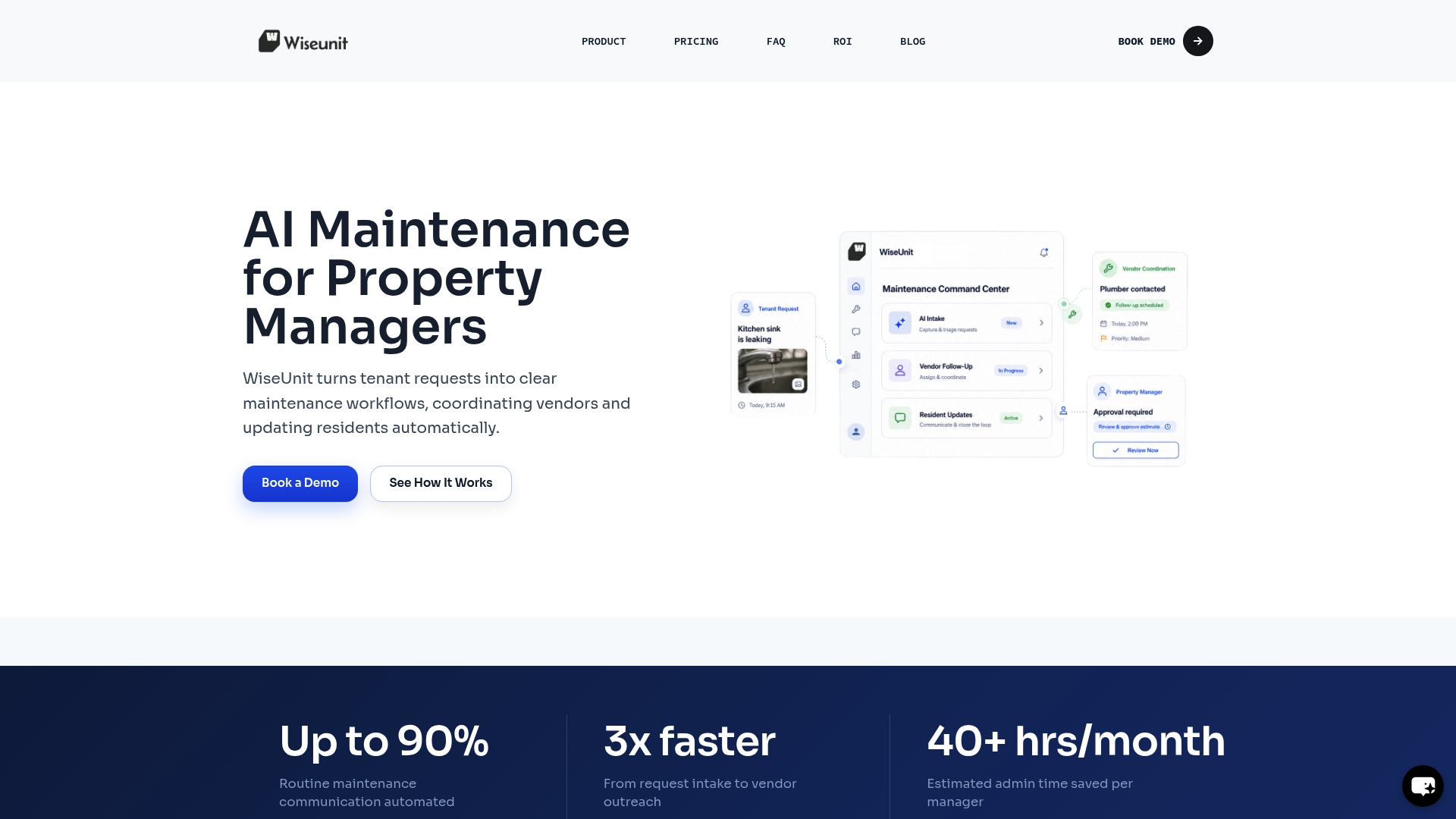
Managing all of these moving parts manually is where property management teams hit a ceiling. Wiseunit is built to be the execution layer that runs the entire maintenance workflow for you. Tenants submit requests by call, SMS, or online form. Wiseunit triages the issue, matches the right vendor using rules-based dispatch, sends confirmation and tracking updates to tenants, and logs everything back into your system (AppFolio, Buildium, or Yardi).
You get automated vendor matching, real-time status tracking, invoice processing, and compliance monitoring in one coordinated workflow. No extra coordinator hires required. If you want to see the financial impact before committing, the Wiseunit ROI Calculator gives you a concrete number based on your portfolio size.
Explore how Wiseunit AI can take vendor coordination off your plate and put it on autopilot.
FAQ
What is vendor tiering in multifamily property management?
Vendor tiering means segmenting your contractors into categories (strategic, preferred, approved, transactional) based on spend, risk, and performance so you can apply the right level of management attention to each group.
How much time does automated vendor dispatch save?
Manual vendor selection takes 12-15 minutes per work order. Rules-based matching reduces that to seconds, with automated escalation handling no-shows and re-dispatch without coordinator intervention.
What KPIs should I track for multifamily vendor performance?
Track first-time completion rate, on-time arrival rate, average response time, invoice accuracy, and compliance status. Review these on a schedule tied to each vendor's tier level.
How do automated updates affect tenant satisfaction?
Automated status notifications at key job milestones reduce maintenance-related calls by 71% and give tenants clear visibility into repair progress, which directly supports retention.
What does a structured vendor onboarding process include?
A structured onboarding program collects licenses, insurance certificates, W-9 information, and a signed vendor agreement through a vendor portal, achieving compliance rates above 95% compared to 60-70% for informal methods.
Recommended
- Vendor Management for Property Management: Systems, KPIs & Scaling Guide (2026)
- Types of rental property maintenance vendors: a guide
- Property Management Maintenance Workflow: Step-by-Step Process to Reduce Workload (Toronto, Dallas, Phoenix)
- Property Management Maintenance Operations: How to Scale Without Hiring (Toronto, Dallas, Phoenix)