

Multifamily maintenance operations are the full system your property runs on, not just the repair calls you respond to. If you manage apartments, you already know that what is multifamily maintenance operations in practice looks very different from the textbook definition. It covers every process from the moment a tenant reports a leaky faucet to the point the work order closes, the invoice clears, and the unit is back in service. Done well, this system protects your asset, retains tenants, and keeps costs predictable. Done poorly, it creates a backlog that grows faster than your team can handle.
Table of Contents
- Key Takeaways
- What multifamily maintenance operations actually involve
- Why preventive maintenance belongs at the center of your strategy
- How digital tools change maintenance operations
- Scaling multifamily maintenance operations without losing control
- My take on what actually holds maintenance operations back
- How Wiseunit handles multifamily maintenance end to end
- FAQ
Key Takeaways
| Point | Details |
|---|---|
| Maintenance is a full system | Multifamily maintenance covers intake, triage, vendor assignment, completion, billing, and closure — not just repairs. |
| Preventive work cuts costs significantly | High-performing portfolios keep 60-80% of work orders preventive, reducing maintenance costs by 12-18%. |
| Digital tools change response speed | Properties using CMMS software average 3.8-hour response times versus 18 hours with manual management. |
| Scaling requires structured workflows | Moving beyond 200 units demands standardized processes, defined roles, and vendor networks — not just more staff. |
| Tenant experience drives renewals | Properties with under 2-hour acknowledgment times see 31% higher renewal rates than those without SLA tracking. |
What multifamily maintenance operations actually involve
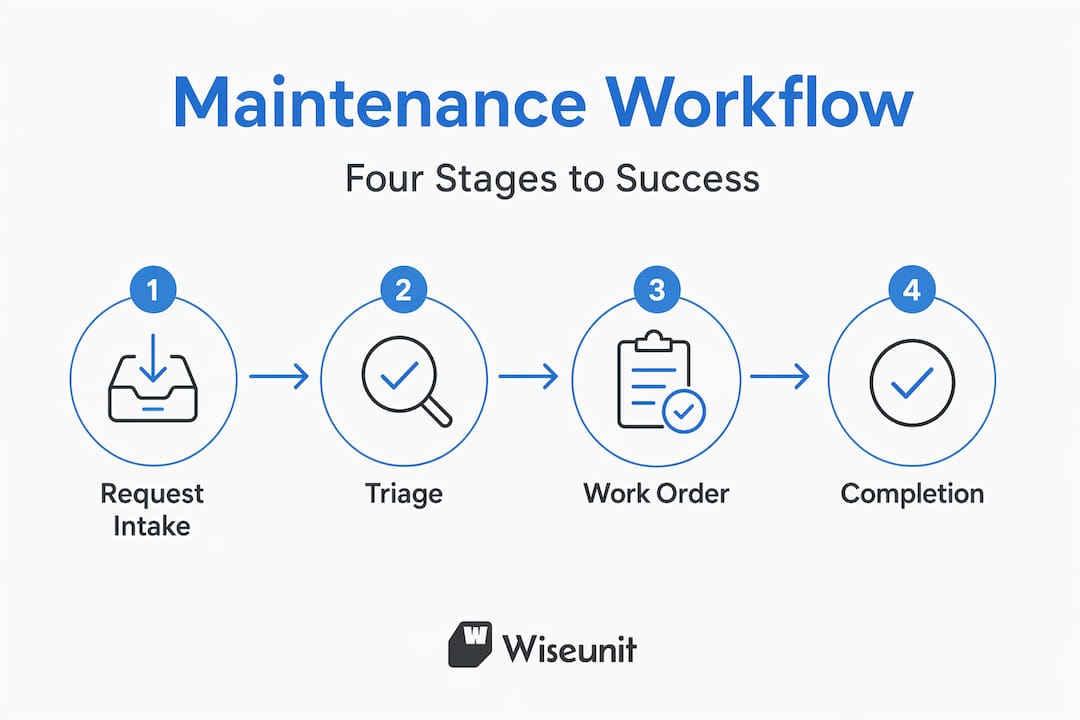
Most property managers start out thinking maintenance means fixing things when they break. The reality is that multifamily maintenance operations are a structured workflow with multiple stages, each one affecting cost, compliance, and tenant satisfaction.
Here is the core maintenance request lifecycle you should be running:
- Submission. Tenants report issues through a phone line, SMS, an online portal, or an email. The channel matters less than having a single, consistent intake point. Multiple uncoordinated channels create gaps and missed requests.
- Triage and prioritization. Not every request is equal. Emergencies like gas leaks or flooding require an immediate response. Urgent issues like a broken heater in winter need same-day action. Routine requests like a dripping faucet can be scheduled. Having a written prioritization framework prevents your team from treating everything as equally urgent or equally deferrable.
- Vendor assignment. Work gets assigned to an in-house technician or an external vendor based on trade, availability, and authorization level. Without a clear assignment protocol, requests sit in limbo.
- Completion and quality check. The work gets done, but quality assurance should not be optional. A quick photo log or tenant sign-off confirms the job was completed correctly.
- Billing and documentation. Every completed work order should produce a digital record: the date, the technician, the cost, and the resolution. Digital maintenance logs protect you during disputes, support investor reporting, and prove compliance with habitability standards.
- Closure. The ticket officially closes, and any follow-up actions (like a scheduled return visit or a parts reorder) get logged.
Pro Tip: Set a written prioritization policy with four tiers: emergency (respond within 1 hour), urgent (respond same day), routine (respond within 72 hours), and scheduled (planned during preventive cycles). Share this policy with your tenants and vendors so everyone knows what to expect.
Standardized workflows eliminate the ad hoc decision-making that creates bottlenecks. When your coordinator goes on vacation, the process should not go with them. Centralizing requests through a tenant-facing portal also creates a timestamped record that manual systems simply cannot replicate at scale.
Why preventive maintenance belongs at the center of your strategy
Reactive maintenance is expensive. You pay emergency rates, deal with tenant frustration, and often face secondary damage that a timely inspection would have caught. Preventive maintenance flips that equation.
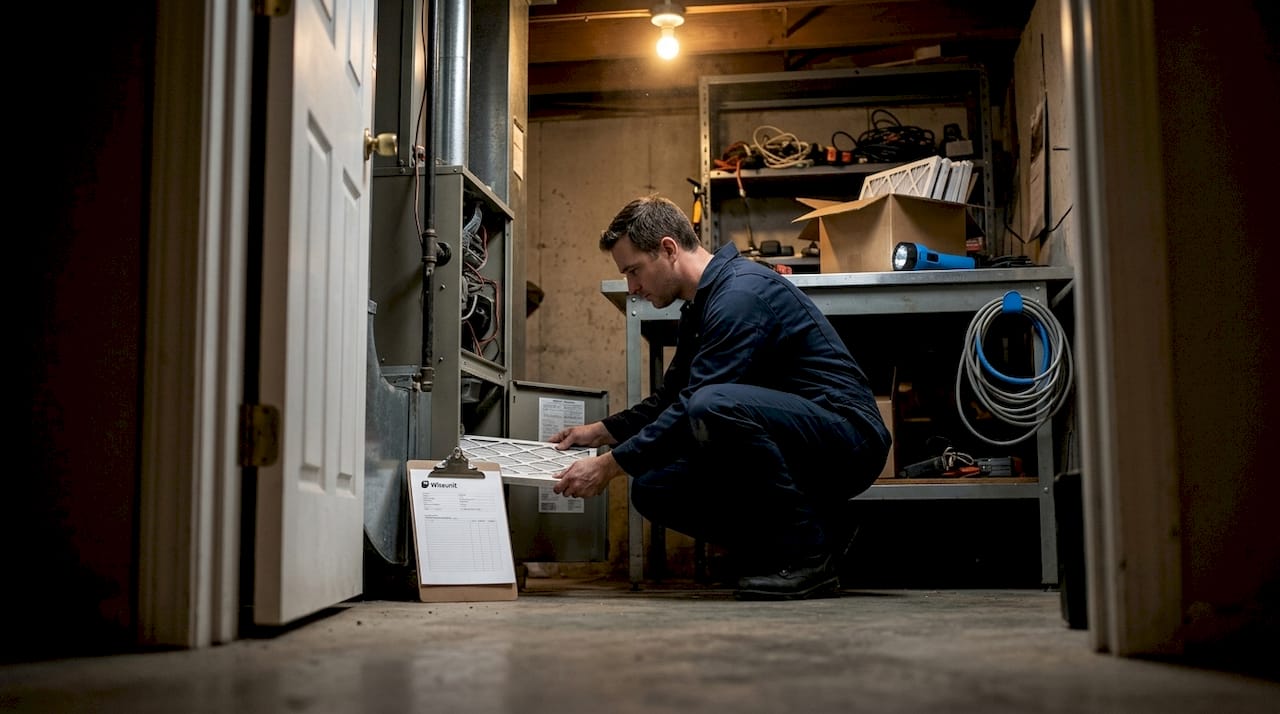
High-performing multifamily operations target 60-80% of all work orders being preventive, which reduces overall maintenance costs by 12-18% and extends equipment lifespan by 20-40%. That is not marginal. On a 200-unit portfolio, those numbers represent tens of thousands of dollars per year.
| Preventive task | Frequency | Benefit |
|---|---|---|
| HVAC filter replacement | Every 3 months | Extends unit life, reduces energy costs |
| Roof inspection | Twice yearly | Catches leaks before interior damage occurs |
| Plumbing checks | Annually | Prevents pipe failures and mold |
| Common area lighting audit | Monthly | Reduces liability and improves tenant perception |
| Fire safety equipment inspection | Semi-annually | Legal compliance and resident safety |
A few common pitfalls to avoid in your preventive program:
- Scheduling without tracking. A maintenance calendar is useless if completed tasks are not logged. Use software to track completion rates.
- Ignoring systemic defects. Multifamily inspections should look for patterns across units, not just individual failures. If five units have the same plumbing issue, you have a building-wide problem, not five isolated ones.
- Skipping after-season checks. HVAC systems that fail in July cost three times what a spring tune-up would have cost.
Pro Tip: Stock on-site inventory of the 20 most frequently replaced parts — filters, faucet washers, outlet covers, light bulbs, toilet flappers. Common parts inventory prevents the scenario where a $2 part triggers a $75 vendor call.
Building a preventive schedule takes about two weeks to set up properly and saves months of reactive chaos. The importance of property upkeep at this level is not just about tenant satisfaction. It protects your NOI and your asset's long-term value.
How digital tools change maintenance operations
Manual maintenance management, meaning phone calls, sticky notes, and spreadsheets, does not scale. It also lacks accountability. If a request falls through the cracks, there is no audit trail. No timestamp. No way to know who dropped the ball.
The shift to digital property maintenance software changes this completely. Properties using CMMS platforms see 79% faster response times and 35% lower cost per unit annually. Manual systems average an 18-hour response time. Digital systems average 3.8 hours. For a tenant with a broken furnace in January, that gap is the difference between a renewal and a move-out notice.
Here is how manual and digital methods compare across the metrics that matter most:
| Factor | Manual management | Digital CMMS |
|---|---|---|
| Response time | ~18 hours average | ~3.8 hours average |
| Annual cost per unit | ~$2,400 | ~$1,560 |
| Accountability | Relies on memory | Timestamped logs |
| Tenant communication | Phone tag | Automated status updates |
| Vendor tracking | Informal | Centralized and rated |
Beyond speed and cost, there are specific features to prioritize when evaluating multifamily maintenance software:
- Tenant-facing submission portal (web, SMS, or both)
- Automatic work order assignment based on trade or location
- SLA tracking with escalation triggers for overdue tickets
- Real-time status updates for tenants and managers
- Vendor performance logging and payment integration
- Native integration with platforms like AppFolio, Buildium, or Yardi
Automating maintenance inside your existing PMS removes the double-entry burden that slows most teams down. Property managers who centralize through digital systems reduce their weekly maintenance workload from 22 hours to 6 hours on a 200-unit portfolio. That is time reclaimed for leasing, owner relations, and growth.
Scaling multifamily maintenance operations without losing control
Maintenance operations that work at 80 units often collapse at 300. The processes that rely on one coordinator's memory and a shared inbox do not survive portfolio growth. Knowing how to manage property maintenance at scale means building systems before you need them, not after the wheels fall off.
Here is how maintenance complexity generally changes as your portfolio grows:
- Under 200 units. One experienced coordinator can manage intake, vendor coordination, and follow-ups. Standardized workflows and a basic CMMS handle the volume. A part-time in-house tech can reduce vendor dependency.
- 200-500 units. You need a dedicated maintenance coordinator, a supervisor role for quality oversight, and at least two vendors per trade. Authorization thresholds become critical. Minor repairs (say, under $300) should not require manager approval every time.
- 500+ units. Scaling beyond this level requires full maintenance teams, in-house parts warehouses, shift coverage for after-hours calls, and portfolio-level reporting for ownership. Ad hoc processes are no longer survivable.
A few practices that hold operations together at any size:
- Maintain two to three vendors per trade in each market. Single-vendor dependency creates service gaps when your go-to plumber is booked.
- Set tiered spending authorization. Empower your field staff to approve small repairs without waiting for management sign-off. Speed matters for tenant satisfaction.
- Standardize after-hours handling. After-hours emergencies require one intake channel, a trained script, and pre-authorized spending limits. Disorganized emergency handling costs real money and tenant goodwill.
- Use vendor scorecards. Track response time, completion quality, and pricing per vendor. Drop vendors who consistently underperform.
The best multifamily maintenance operations guide is the one built for your specific portfolio size and trajectory. Do not wait until you hit a capacity crisis to document your processes.
My take on what actually holds maintenance operations back
I've seen a lot of property management teams operate under the assumption that their current system is "good enough" until something forces a reckoning. A mold complaint. A maintenance backlog that hits 60 open tickets. A vendor no-show during a heat wave. What I've learned is that the gap between a functional operation and a reactive one comes down to three things that most teams ignore until it is too late.
The first is phone-based intake. I've watched coordinators spend entire mornings on hold with tenants, re-explaining requests they already received, because there was no central log. Phone calls are not a system. They are a liability. The biggest misconception is that informal intake methods can scale with a growing portfolio. They cannot.
The second is the absence of a prioritization framework. When everything is urgent, nothing gets triaged properly. I've seen $500 emergency calls dispatched for a loose towel bar while a unit with a failing water heater waited three days. Clear priority tiers prevent this.
The third is treating technology as optional. I'm not saying every team needs the most expensive platform. But some form of centralized, timestamped record-keeping is non-negotiable if you plan to grow, report to investors, or simply sleep better at night. You can reduce maintenance costs dramatically just by switching from spreadsheets to a basic CMMS. The ROI is not theoretical.
Build the system before you scale. Not during a crisis. Not after your best coordinator quits.
— Laur
How Wiseunit handles multifamily maintenance end to end
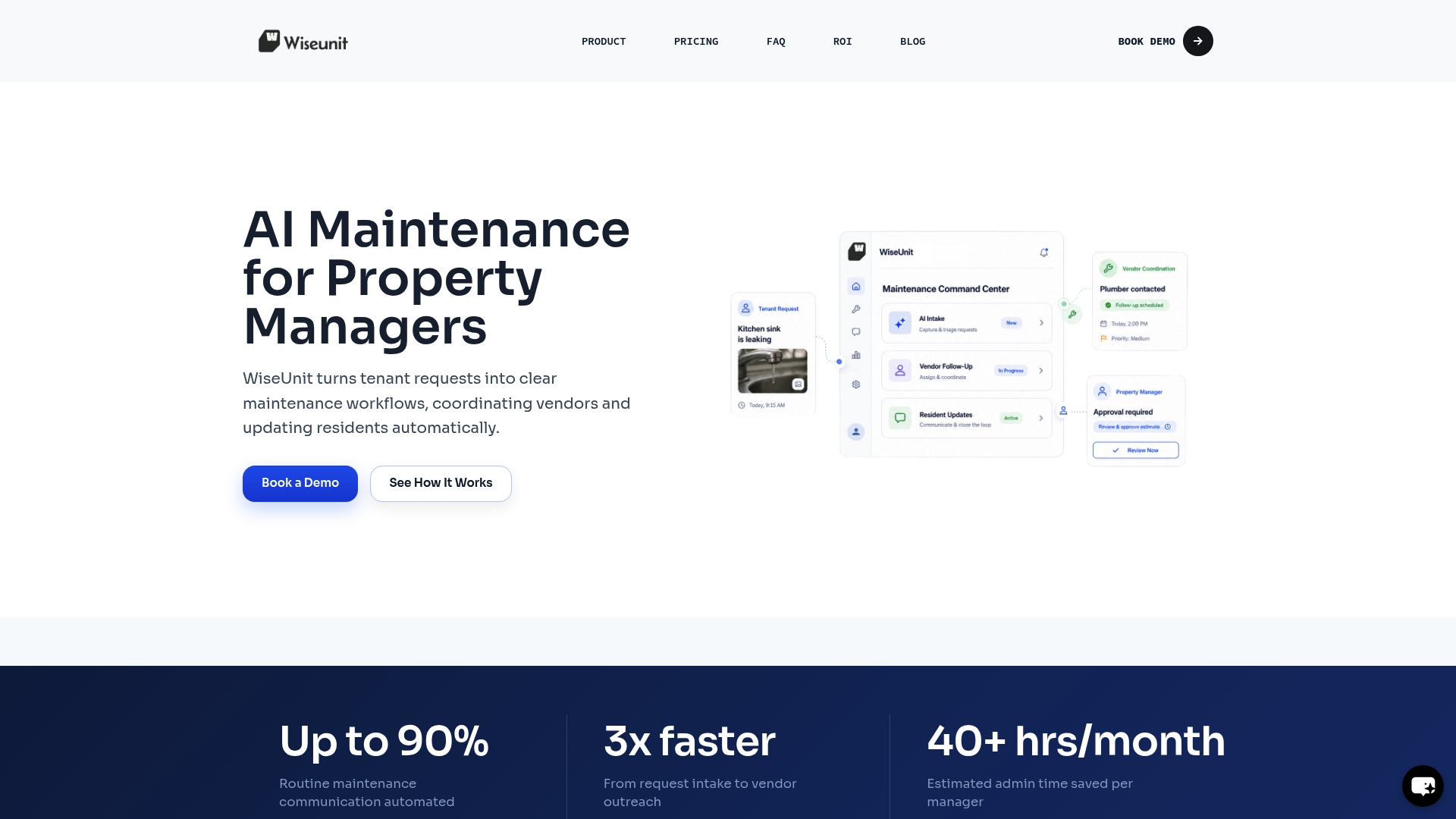
If the workflows described in this article sound right in theory but difficult to execute with your current team, that is exactly the problem Wiseunit was built to solve. Wiseunit is an AI-powered maintenance execution platform designed for multifamily property managers. It handles the full maintenance lifecycle: tenant intake via call, SMS, or web form; issue triage; vendor dispatch; scheduling; follow-ups; and real-time status updates inside your existing property management system.
Unlike basic ticketing tools, Wiseunit actually executes the workflow. It does not just log requests. It coordinates the next steps so your team is not the bottleneck. Property managers using Wiseunit reduce manual coordination time significantly and handle more units without adding maintenance coordinator headcount.
Want to see what the operational impact looks like for your portfolio? Run your numbers through the Wiseunit ROI calculator and get a clear picture of what faster response times and lower per-unit costs mean for your NOI.
FAQ
What is multifamily maintenance operations?
Multifamily maintenance operations refer to the full system of processes used to manage maintenance requests across apartment communities, including tenant intake, issue prioritization, vendor coordination, work order tracking, and billing. It covers both reactive repairs and scheduled preventive work.
How do you prioritize maintenance requests in multifamily properties?
Use a four-tier framework: emergency (respond within 1 hour), urgent (same day), routine (within 72 hours), and scheduled (preventive cycles). Documenting and communicating this framework to tenants and vendors sets clear expectations and prevents unnecessary escalations.
What percentage of work orders should be preventive?
High-performing multifamily teams target 60-80% preventive work orders, which reduces maintenance costs by 12-18% and extends equipment lifespan by 20-40% compared to primarily reactive programs.
How does CMMS software improve maintenance response time?
Properties using digital CMMS software average a 3.8-hour maintenance response time versus 18 hours for manual management, while reducing annual per-unit maintenance costs from $2,400 to $1,560.
When do you need a dedicated maintenance team in multifamily?
At under 200 units, one coordinator typically manages operations. Beyond 500 units, full maintenance teams with supervisors, in-house technicians, and after-hours coverage become necessary to maintain service quality and compliance.
Recommended
- Property Management Maintenance Operations: How to Scale Without Hiring (Toronto, Dallas, Phoenix)
- Property Management Maintenance Workflow: Step-by-Step Process to Reduce Workload (Toronto, Dallas, Phoenix)
- WiseUnit AI Blog | Maintenance Operations Insights
- Maintenance cost budgeting for rental properties: strategies that work